Your excellencies Bishop Tobin and Bishop Henning, my brother priests, deacons, the coordinator of the office of life and family of the Diocese of Providence Lisa Cooley, prolife advocates, brothers and sisters in Christ,
There’s cause for rejoicing here on the 50th anniversary of the landmark law that legalized abortion in our country. For almost 50 years we marched, protested, fought back, spoke out, defended the sacredness of life, educated our youth, we defended the family, and most importantly we prayed. On this 50th anniversary, as of June 2022, on the Feast of the most Sacred Heart of Jesus, Roe v. Wade is no more…. It’s no more because of your sweats and tears and perseverance; it’s no more because you didn’t allow your praying knees to get lazy. It’s no more because what’s on our side is bigger than what’s on their side. Glory to God in the highest. Peace to His people on earth….
Many ask: why do we still need to fight, march, and speak out? Did we not already win?
Well, 3 reasons. The family is under attack. Abortion hurts. To be prolife is to be pro God.
We still fight and march and speak out because the family is still under attack. The most fundamental institution —the most important cell of any society—the oldest and most sacred school of life—is under attack.
Look around, Planned Parenthood – the biggest abortion provider in the world—is still standing; young school children are shamelessly taught that premarital sex, transgenderism, contraception, abortion, porn, same-sex marriage, euthanasia is normal and healthy; how can we stop? Over 2,000 babies die every day on the altar of personal freedom in the U.S., and globally 200 thousand babies are sacrifice on the altar of choice. One third of my generation (the Gen Z) is killed due to abortion. How can we not fight and march and speak out against such atrocities? All this is happening in the family—
So, we have a duty to defend the family because attack on one family — however weak, small, and vulnerable that family may be—is attack on all family.
We still fight and march and speak out because attack on the family is attack on religion and society because the family has always been the most important building block of religion and society.
Obviously, a strong family makes a strong church. A strong church makes a strong society. So, it’s both religious and patriotic to fight and march and speak out.
There’s more! Little story in my family about vocation.
Where did we learn respect, forgiveness, and generosity toward our neighbors? Obviously in the family. Where did we learn right from wrong, obedience of the established law, love for the elderly? The family. Where did we learn discipline for life’s high and low moments, how to show healthy affectivity, good manners? Again the family. where did we learn to foster good habits? Where did we learn to pray and discern God’s plan and vocation for our lives? The family. Always the family. That’s why we can’t just sit by and let someone destroy the family. That’s why we still fight and march and speak out.
Point 2. No one deserves to suffer that much. In our society, abortion is presented as women’s liberation, promoted as safe and sound medical care, but haven’t you met someone who had done this? The amount of guilt, psychological pain, shame, self-torture they undergo, for years at times, is obviously not liberating or sound. They never forget. They suffer physically, emotionally, and psychologically—silently—alone– for decades at times.
Do they try to put it in the past? Yeah. But the sight of a baby, a baby crying, a baby shower, a commercial with a baby, a sign on the road, a word, the date it happened, and their conscience never allows them to do so. Is this liberating?
We do what we do because we want to spare as many women and men as possible from such situation. We are the voice of mercy, forgiveness, and real compassion for such a person. Abortion hurts. Yes, we fight and march and speak out, but we offer a place to unload the burden. That place is called the confessional where misery meets mercy. Everyone deserves healing.
When you meet someone with this situation, the message must always be: “There’s help for you. The church will accompany you and put you on the path of recovery and healing”. When someone is struggling with such a decision, we always offer alternatives. We still fight and march and speak out because if we can’t or couldn’t save the baby, we at least want to save the mother.
Adoption, financial, health, housing, and community support in places like St. Patrick Church, the Right to Life, Mother of Life Center, and of course the diocesan office.
Point 3. To be prolife is to be proGod. I know of a woman who was 5 months pregnant, and she had terrible hemorrhages. When she visited the doctor, it was concluded that it will have to be either her life or the baby’s life. It couldn’t be both. This woman asked the doctor for 3 days to ponder the decision. She did what many would consider crazy today—she went home and begged St. Joseph to spare her life and her baby’s life. By the time she went back to the doctor, there was no more hemorrhages. This baby is talking to you right now. Being prolife is always personal.
Even if she didn’t have to, my mother relied on her faith to save her baby because she knew she was carrying a sacred, beautiful, and worthy extension of God within her. She knew the decision she was confronted with was not just a tiny, innocent face of a baby; a blurb. Just a tissue. it’s the enormous, innocent life of the Almighty God in whose image and likeness every baby is procreated. To destroy such a life is to destroy God. So, when you defend life, you defend God himself.
That’s why no one, no law, no country, no institution, or constitution should be allowed to terminate a life at will.
That’s why we fight and march and speak out. So, we won’t stop. We can’t stop. Thank you for defending life! God bless you!



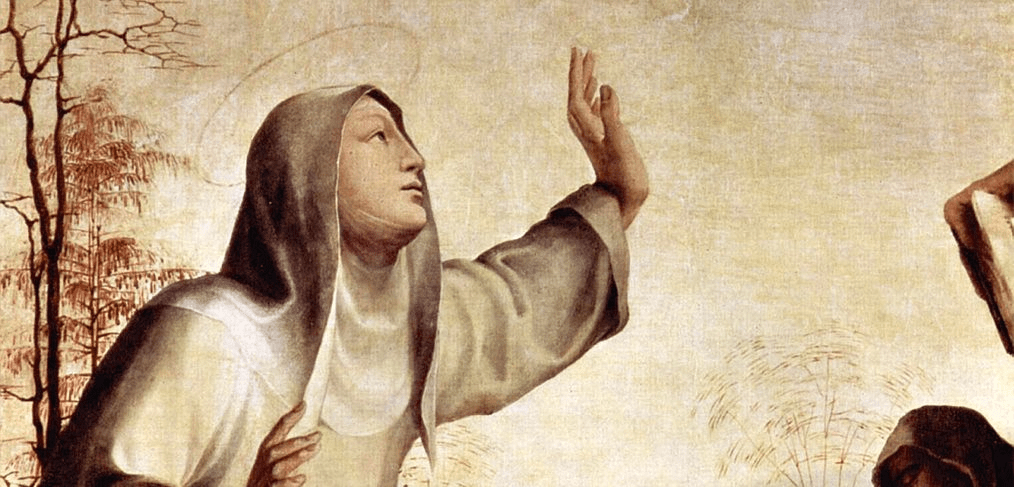




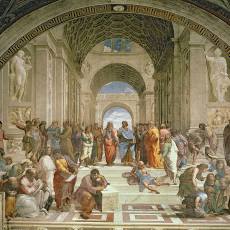 Art and beauty, in the words of Plato, give the human person a healthy “shock”, draws him out of himself, wrenches him away from resignation and being content with the ‘everyday’; rather, it “reawakens” him, opens afresh the eyes of the heart and mind to experience awe and wonder. Beauty pulls us up.
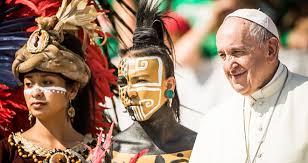
 It’s multi-ethnic and multi-cultural. Each community has its own worldview, symbols and meanings, and vision of the future. They know how to adapt to the territory. However, today the scientific community warns of the risks of deforestation of that region. This endangers the survival of the entire ecosystem, biodiversity and the cycle of water vital for the survival of the tropical forest; 17% of the region is deforested already. In addition, the Amazon is an invaluable and fundamental life support systems for air, water, soils, forests and biomass for the whole of the Americas. As of late, it’s becoming a place of pollution-related diseases, drug trafficking, illegal armed groups, alcoholism, violence against women, sexual exploitation, human trafficking and smuggling, organ traffic, sex tourism, the loss of original culture and identity. Many feel we can no longer ignore this is due to a lack of education of the inhabitants. A sustained presence of the Church there can transform that.
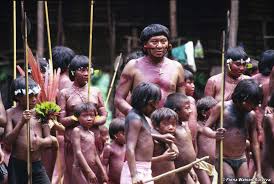 b) It is argued that due to the shortage of priest in the Amazon region, the people are being deprived of the most precious gift Christ left his people—His Body and Blood. Cardinal Sarah addressed that when he clarified for all that the priesthood is neither a right nor an obligation. The Eucharist is an unmerited gift, not an obligation. Such obsessions are the product of ideologies developed by sorcerer’s apprentices exploiting the distress of the voiceless. In strong language, Sarah maintained that we cannot tamper with the doctrine of the priesthood and celibacy in order to tailor-make a response to the felt or alleged needs of some extreme pastoral situations. Celibacy is a driving force that makes evangelization and missionary credible. Ordaining married men to the priesthood would discredit their missionary motives. A man does not become a priest because it is necessary to fill a need of the community. Priesthood is a state of life, not a function to be fulfilled. Marriage is a different state of life. To ordain a married men to the priesthood would amount to diminishing the dignity of marriage and reducing the priesthood to a job.
 Not convinced? In the history of the Church, we have many such examples. In Korea, one the missionary priests were martyred, laypeople kept the faith alive for over one hundred years. In Uganda, through the work of laypeople, the faith grew and multiplied. In japan, though the missionaries were expelled and martyred, the Christian community lived for two centuries without a priestly presence. The point is this: we don’t need to clericalize the lay faithful. We need to disciple them as Jesus disciple the 12 and send them forward. Their very baptism and confirmation are an untapped potentials have not been exploited nearly enough, and we are underestimating them. Satis!
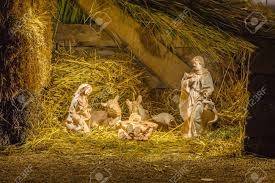 To enter our world, he not chose a teenage girl, he chose to be born in the unsanitary, dirtiest, most dangerous, and unexpected places you could have imagined. Even if you were drunk, you probably would not choose such a place for the mighty God to be born.
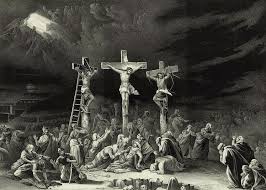 The place he was crucified was at some point the garbage dump of the city. Yet, it became one of the most important places in the history of the human race. Even you put a whole team of drug addicts together, they probably wouldn’t have chosen such a place.
 joebricereview