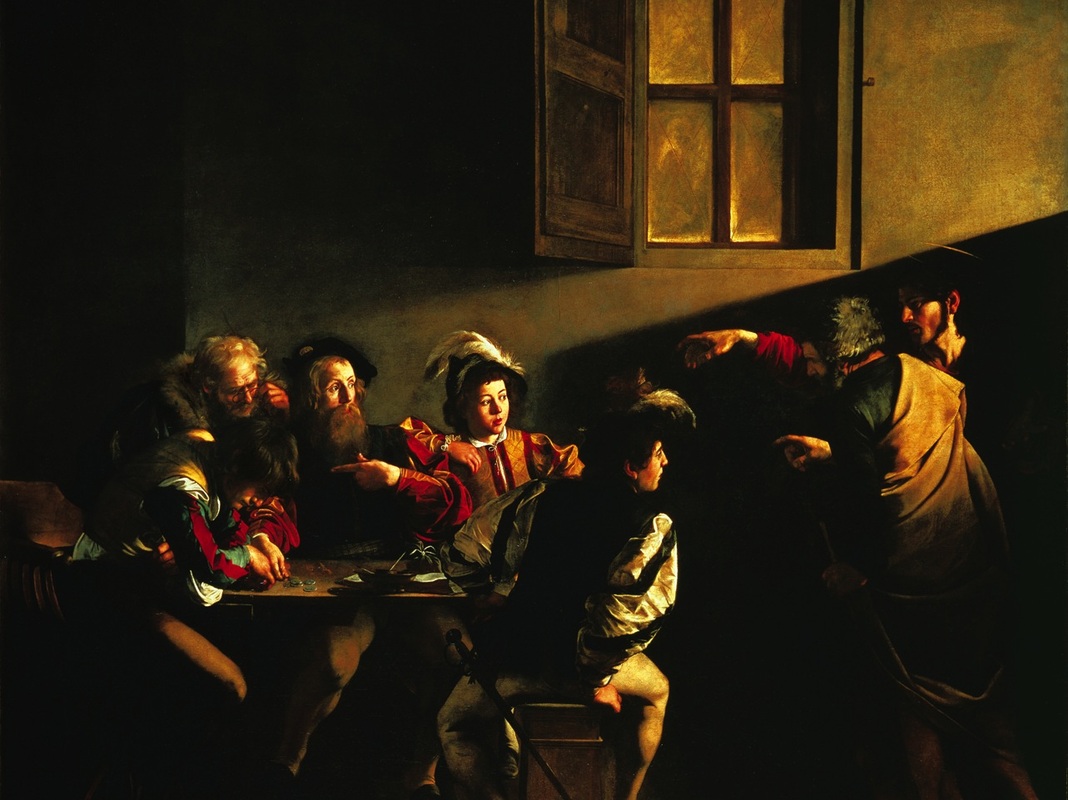
What are you looking for?
Is there anything you’re looking forward to?
What drives you? What gets you out of bed on a daily basis?
What is one thing you’d do even if you wouldn’t get paid for?
If you have an answer to these questions, then you’re a happy joyful, full of life person.
If you don’t have an answer, if you’re actively looking for an answer, I’m glad you’re here. This talk should put you on the right path. It will at least point the right way.
This talk is entitled “the joy of saying yes”. Before we get to say yes, we need something or someone to say yes to.
To get you that point, you don’t have the luxury of simply going with the flow. You can’t simply do what you’re told without asking questions.

point one—You can definitely not be indifferent. Rev 3:15 I know your works. You’re neither hot nor cold. Lukewarm. Indifferent.
Jesus alluded to this in Mt11:16-17— “To what can I compare this generation? They are like children sitting in the marketplaces and calling out to others: We played the pipe for you and you did not dance. we sang a dirge and you did not mourn. When you live for nothing, even God gets tired of you. When you don’t care, what are we to do with you?”
When you live for something or someone, life becomes exciting. No fear. Bold. Joyful. Future is filled with adventure.
Look at the apostles. They started as frustrating fisherman or tax collector or simple men to boldly testify later “we mst obey God rather than men”. Jesus has been raised from the dead. That means something for everyone and we cannot not tell people about it.
If you want to experience joy, you have to make a choice. It’s a choice for joy happiness, abundant life.
Rev 3:20 behold, I stand knocking at the door
John 10:10- Jesus says: I have come to give you life and to give it abundantly.
Second point. John 1:35– what do you seek? Come and see. Be ready to be surprised by joy. When God calls, he gives you everything and takes nothing away. He does not make you less yourself. He allows you to be yourself and then some. 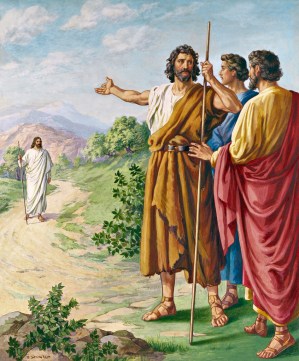
Are you just surviving? You were made to thrive, to live life to the full. You were made to live in communion and deep intimate friendship with your creator. When that happens, you are completely happy.
Don’t you sometimes feels like something is missing? You have everything (job, car, career, good supporting family and friends, even money and popularity sometimes etc.) and yet something is missing?
If that ever happens to you, God is calling to Luke 14:10 come higher.
It’s when you come to what God is calling you to, that’s when you thrive. It’s when you ask God to help you discover what you were here for, that’s when you live life to its fullness.
It’s unthinkable that God created you for nothing.
In Jer. 29:11 the Lord says: “I know the plans and thoughts I have for you, ‘plans for peace and well-being and not for disaster to give you a future and a hope”.
Are you thriving where you are? Would you do what you’re doing even if you don’t get paid? Does what you’re doing get you out of bed every morning thinking man I can’t wait to start…?
If the answer is no. You have an opportunity for a new beginning.
Third point: Isaiah 55:10 purpose. Everything has a purpose. Explain this.
Now the million dollars question is this: how do you find your purpose? It’s much easier to find God’s plan for things, but how do we find out what God’s Plan for us? not easy, but there is a way.
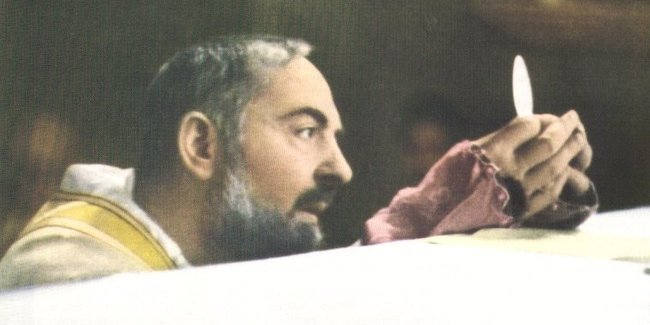
Sit before the Blessed Sacrament in the classroom of silence with phone off, and ask the One who created you to tell you what he created for. “Lord, what do you want me to do with my life?” Thats how I’ve found my purpose in life, and I am a person of joy consequently.
I can guarantee you he will answer. He loves you too much. He cares about you too much to ignore you. He wants you to thrive. There’s no thriving outside of his plan. That’s the beauty.
So stop looking for stuff in TV, iPhone, there’s no ‘App’ for Gods plan for your life. No one but he can reveal to you what he wants for you. So be still. Turn to the lord with your whole heart. And he will turn to you with his whole love.
The fourth point. Don’t say you’re too old or too young. Jeremiah was under 20 when called to give an unpatriotic message to Israel. Moses could not even speak when he was called to speak to the most powerful king of Egypt. St. John the evangelist was 16 when Jesus called him.
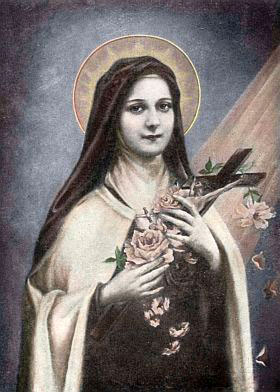
Therese of Lisieux was 21 when he discovered the little way. A genius way and simplified way to live the gospel.
St. Jean Marie Vianney was 33 when he was sent to one of the worst parish in France. He transformed the town and the parish to one of the holiest known part of the world.
Tiger Wood was 3 when he first broke 50 on a nine holes of golf.
Mozart was 5 when he wrote his first symphony.
Bill gates was 19 when he cofounded Microsoft.
Winston Churchill was 65 when he became Britain’s prime minister and picked a fight with Hitler. A much needed fight.
Abraham was 100 when Isaac was born.
Mary was 13 or 16 when she said ‘yes’ to become the bearer of the most important and greatest thing that has happened to our world.
Mother Teresa was 40 when he began the missionaries of charity. She is worth dwelling on. How did she begin? Silence in front the Blessed Sacrament. Then boom! Her calling becomes clear like a noonday sun. She discovered exactly what to do with her life. There was never a day she questioned that call.
There can be tough moment, but when God calls, nothing is too difficult. There’s nothing you cannot handle. No fear can restrain you.
Find what God is asking you to do. Then you will find joy. Lasting joy.
 After the peasant and naïve girl Lucia was kidnapped, she fervently turned to our Blessed Lady for help. Being a merciful mother, she helps her not directly, but by changing the lion heart of her captor (the Unnamed) into a little lamb. That is the only reasonable explanation behind his tormenting heart once he accepted the task of kidnapping her. He gets angry with himself for accepting; a sort of remorse and disquiet settle in his heart; the memory of past crimes start to emerge.
 An encounter with God is life-changing and ensues a better future. As pope Benedict puts it, “one who has hope lives differently [because he] has been granted the gift of a new life.
 The cardinal suggests that this visit could only be good news that God has touched his heart. However, the Unnamed asserts that there cannot be good news when hell is raging in his heart. “Where is that God anyway”.
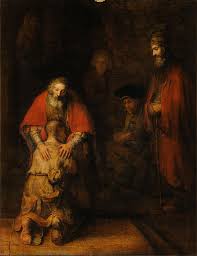 In conclusion, in case we forget what the church does, this conversion is how the church relates to the world. She is a mother who never disowns her children regardless of how low they have fallen into sin. As long as they turn around and return home, her arms are wide open waiting to hug them. That’s what the church does for every sinner; he should seek them out. That’s what the new evangelization is about—seek the lost, and if she does not, when they return, her doors are always wide open. The sins of one sinner affect the whole. So when one sinner is converted, the whole benefits. The bigger the sinner the more beneficial it is for the common good. The whole benefits when one person decides to embrace a holy life. Although it is the task of the state to establish peace and security by means of power, conversion of heart is the most powerful way to establish peace and security. Only the church can establish it in such way. The cardinal had thus done well to receive the Unnamed with such open arm given the threat he was for society at large. He was saved and I suspect many of his household will also be saved with him.
 Governments cannot solve the world’s suffering. Despite the scientific and technological advancement, material and spiritual suffering will always linger (ibid 30a). Through the inescapable sense of solidarity, through their commitment to love, both material and spiritual sufferings are alleviated. Church agencies can especially serve as a reference point and inspiration for civil society on how best to serve the poor. Through this cooperation, it becomes clear how faith enlightens reason in its work all the while remaining above politics. Consequently, Christian charitable activity is free of parties and ideologies.
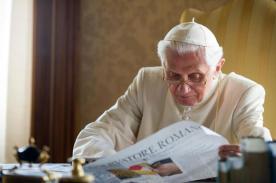 Man’s greatness is intrinsically bound to God. Man cannot be redeemed by science for he cannot be rebuilt from outside.
 A sincere, genuine, effortless laughter is irresistible. Who does not like a person with an easy laugh? Who can be unmoved before the laughter of an innocent child? Who does not throw a smirk when he sees or hears a loud, deep, joyful laugh? It can bail a person out of anything. Ingrid Betancourt, a French journalist who was held in captivity for 6 years by the Columbian guerillas, asserts “I knew of no instruction manual for reaching a higher level of humanity and a greater wisdom, but I felt intuitively that laughter was the beginning of wisdom, as was indispensable for survival”. Apparently laughing was the only antidote to her misery in the jungle. She chose laughter in the midst of darkness and light was found. So laughter can empower us. In this sense comedian Craig Ferguson is right: “You gotta laugh because if you didn’t, you’d cry”. Laugh! It will change your interior disposition and your thoughts. Laughter gives rives to a new you—new world, new perspective, and new horizon. Learn to laugh and do it often. Cultivating a cheerful disposition is the most conducive mean to laughter.
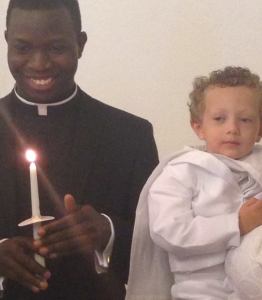 I hope this did not start a negative view of laughter in your mind. I only wanted to present both sides. As you know, nothing good exists without a good rule. Self-control is the rule by while laughter is measured. A cheerful and joyful heart is a peak into the eternal chamber of God. God has a good sense of humor as we often say. It is believed that if we could grasp the universe as it truly is, we would have to laugh because it would be interesting seeing the divine wisdom behind it all. That’s why holy people who get a privileged glimpse into God’s mirror always have a good sense of human. They see purely and it is humorous.
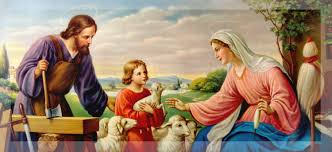 The Mother of God is elevated to the highest pedestal attainable by a human being. She deserves this because her life on earth matches the blueprint in God’s mind; she is, and deservedly so, the highest honor of our race and the mother of our salvation. This honor is due to her fiat and her intrinsic connection to the divine Son of God. She is Theotokos— God’s bearer—and the mother of all mankind. However, something would be amiss if the Son of God was deprived of a father. Thus Joseph occupied a pivotal place in the economy of salvation. He is the second greatest saint in the eyes of the church. He was handpicked to fulfill a primordial role.
 However, this role was not a walk in the park. Like Mary, he was not given a special grace from birth to be the father of God. He was a sinner striving to be virtuous. So it was not easy for him to deal with mystery, so he must have struggled to accept the angel’s annunciation to him. Someone being pregnant through the power of the Holy Spirit is mind blowing and unprecedented. Although a man of faith, he could not have swimmingly accepted this occurrence. To make things worse, out of all the possible mediums, God chose a dream to announce the greatest of news. Sheer madness, however that’s God’s madness. Madness that comes from God is much more beautiful than wisdom of human origin. Despite all the researches done on dream, we still don’t know how best to take dreams. So human that he was, he struggled to decipher what was being asked of him. When things come to light however, he cooperates wholeheartedly. That’s a lesson for all of us. It is reasonable to struggle to figure out God’s plan for our lives, but once evident, leave no room for doubt. Commit as if there had never been any doubt.
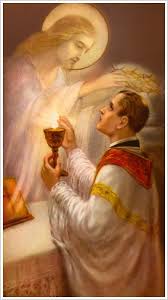 Moreover, Joseph teaches the priest how to deal with mysterious phenomena. Joseph was human dealing with God’s mystery (Jesus) and the greatest human (God’s spouse). The priest is a human being dealing with God (the Eucharist) and fragile souls that he must save. As eli the prophet once remarked when his sons were mishandling the sacrifice of the temple: “If a man sins against another man, God can mediate for the guilty party. But if he sins against the LORD, who can intercede?” (1 sam. 2:25).
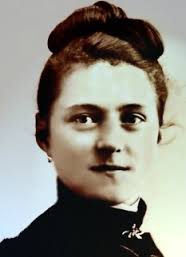 Let’s look at St. Therese of Lisieux for example. Died at 24, never went to college, cloistered at 14, yet was canonized only 25 years after her death, and now stands as a doctor of the church. She displays the marks of a very defined and exceptional character. Though she had never left the cloistered walls of Carmel, in 1927, she is declared the patroness of Missionaries alongside a towering figure like St Francis Xavier, who brought the Gospel in Central America. In the homily declaring her a doctor of the church, John Paul II states, “when the Magisterium proclaims someone a doctor of the Church, it intends to point out to all the faithful that… the doctrine professed and proclaimed by that person is a reference point. That means it not only conforms to revealed truth, it also sheds new light on the mysteries of the faith, and gives deeper understanding of Christ’s mystery” (3).
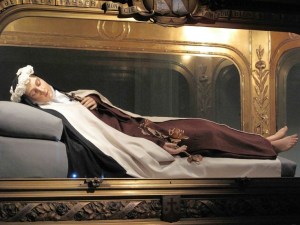 Although that may sound unorthodox to pious ears, this understanding of heaven as restlessness echoes some of the church Fathers’ view. We must not be selfish; in heaven, we are no longer wayfarers, so we can focus on helping those striving to get there. The idea that heaven is eternal happiness where all movements cease and we rest in God after the restlessness of this world does not fit the infinite depth of God. As she saw it, heaven is eternal love not eternal happiness because love, which is infinitely richer and deeper than happiness, more fittingly defines God’s being.