There’s nothing more beautiful in this life than a beautiful friendship. For Ben Sirach the sage, “a true friend is a sturdy shelter; he who has found one finds a treasure”. A true friend is beyond price; no amount can balance his worth. A loyal friend is like a medicine that keeps you in good health. Only those who fear the Lord can find such a friend (Sir. 6:114-7). Thomas Aquinas agrees. He says “There is nothing on this earth more to be prized than true friendship” (Summa Theologica, Supplement Question 73, Article 1). Aristotle noted in the Nicomachean Ethics book VIII that a friendship based on virtue is the most glorious thing we can achieve on earth. Some go through life without ever finding one; these are grumpy and frustrated. Others do find one, but fail to recognize his value; these have experienced some good days. Still others find one, but only recognize his value after he loses that friendship. These kinds are in search of that true friendship. And the luckiest of them all do find a true friend and ipso facto recognize that gift and cherish it like the greatest pearl. That one is blessed indeed.
 Who is a true friend? It is someone who is there, physically or in spirit, in moments of anguish, trials, adversity, joy and festive. It is someone who is not afraid to challenge you to become the most virtuous, disciplined, and the best you can be in life. A true friend is always honest and trustworthy. A true friend knows his friends. A true friend lets himself be known.If you want a true friend, become one yourself.
So it is really difficult to find a true friend, and it takes time to come to maturity. According to Cicero, “nothing in the world is harder to find than an excellent friend” (on friendship #21). Only the test of time allows us to know whether or not we have found one. Plutarch, the first century Roman philosopher, argues that a true friend stays true to the truth; a true friend is not a yes-man; he approves only what is good in his friend, and would even go so far as to hurt him for the good. Plutarch suggests that we test friendship by pretending to change back and forth to see whether he will follow indiscriminately. Not a bad idea!
For Cicero, goodness is what makes friendship work. Friendship can only exist between good people. By good, he means those whose actions and lives are unquestionable; those who are free from greed, lust, and violence; those who have the courage of their convictions (Essay on friendship #5). In this view, friendship is defined as a complete accord on all subjects human and divine, joined with mutual goodwill and affection. The latter is crucial for friendship. Without it, there may be a relationship, but not friendship. The former is what binds the friendship together. They help each other discover what is most important in life and they encourage each other to live it out. Aristotle views friendship as a necessity, but something rare to find. That view finds echo in Aristotle’s Nicomacheans ethics, he asserts that a friendship grounded on goodness has a lasting quality to it.
 The saints are the best of friends. Whereas you and I can be unbearable at times, the saints are always pleasant company. They don’t show off; they don’t blame; they show no petty humor; they don’t lecture us even when they should. They challenge, inspire, and encourage us by simply living their own lives to the fullest. By the examples of their lives, we are inspired to live the ordinary circumstances of our daily lives extraordinarily. Think of Pier Giorgio Frassati. He bore witness to his faith among his friends in the most exemplary ways. He did not force them into his way, but his beautiful life inspires them to adopt his way. His dedication to the poor made him outstanding among us all. How many of his friends did he influence to live a more humble, joyful, helpful, and meaningful life by his dedication? Goodness is contagious. Even a blind man knows when he is in the presence of a bright light.
Virtue precedes friendship. It is the standard by which we measure friendship. How can life be worth living without friends? There is nothing more delightful than to have a trusted friend to whom you can say everything with the same absolute confidence as to yourself. Without a friend to share one’s joy, prosperity is devalued by half. Misfortunes would be unbearable without a friend to feel them on one’s side (on friendship #6). The attitude of job’s three friends corroborates this view. When they heard of his troubles, they went and empathize with him and comfort him. …They could hardly recognize him; they weep aloud, and they tore their robes and sprinkled dust on their heads. They sat on the ground with him for seven days and seven nights without saying a word (Job 2:11-13). Friends such as these, everyone needs one. So true friendship enhances even the most unbearable misfortunes of life.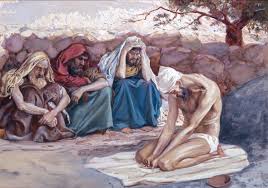
Cicero, the greatest of the Roman orators, asserts that friendship embraces innumerable advantages. It is more expedient and universal than wealth, power, office, and honor. Where true friendship exists, it enhances prosperity, and relieves adversity of its burden by half (on friendship #6). A true friend is the image of a second self. Where one’s friend is one is; if his friend is rich, he is not poor; though he is weak, his friend’s strength is his; and in his friend’s life he enjoys a second life even after his own is finished. The Romans went so far as to say that whatever in nature and the universe was unchangeable was so in virtue of the binding force of friendship (friendship #7). There’s a lot to chew on here.
Choose your friends wisely. As the proverb goes, “you end up resembling whoever you spend most of your time with”. If you had a choice between St. Clare, St Joseph, and St. Francis and Jay-Z, Taylor Swift, and Bruno Mars, who would you choose? Is it not better to spend time with dead people who bring us to life and with live people who bring us to death? If you could choose between virtues and vices, spiritual growth and material growth, what would you choose? You have that choice. Choose wisely.
Befriend the saints and you will be the best of friend to your friends. Nothing is more precious than a spiritual friend because it does not seek its own advantage but the well-being of the other. That’s the selfless and unconditional love that’s born out of true friendship.




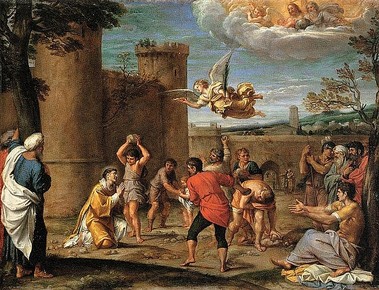
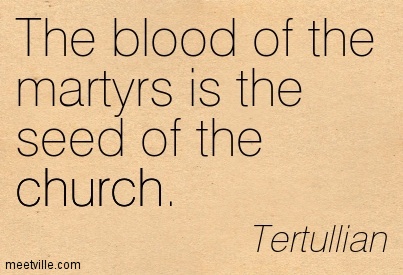


 The teenage years are a fragile period in life, yet more probably happens during this period than all the other periods. The moment we attain the age of adolescence, we have to choose a college, a major; that means leaving the bosom of our parents for the first time. It is an exciting time, but it is also full of unknown. The key to independence from parents is wide open. Peer influence and acceptance become very important at the same time. Also, the bodily hormones don’t help the cause either (you know what I mean). More importantly, it is also the time when the church asks them to make a commitment to the faith through the sacrament of confirmation. Thus, indubitably, the teenage years are the hardest stage of our development. To quote a good friend of mine: “it is hard to be a teenager”.
 At that stage of life, life’s most crucial questions such as what should I do with my life? What should I do to be successful, loved, and happy? What’s the meaning of all this? These questions become the most vivid. They demand that answers are articulated, and yet no answers make sense yet. So while it is necessary to let them to figure things out on their own, but not without guidance. Not bossy guidance, but good people they can trust. They are bombarded with all kinds of temptations, so they flirt with failure on a daily basis.
 First, get a mentor. Have an older person who can advise you, and you can look up to. This is the best gift you can give yourself. Let’s face it. You have to do a lot, but you don’t know a lot. You probably have a lot of potential, but you have no experience. So if you are to make fruitful choices, you must have a guide. That mentor can be a parent, a friend, an aunt/uncle, your pastor, or a teacher. Get someone! Get someone who inspires you to be the best version of yourself, and someone who will challenge you if need be. Be honest with him/her.
 Second, befriend books. As the adage goes, “those who read lead”. Make it your goal to read something daily. Magazine, newspapers, online stuff don’t count as part of your daily reading. Reading allows your thinking and verbal skills to develop. Your young mind is open to endless possibility. Be careful what you feed it with. A young age is the time to increase your vocabulary repertoire. The more you read, good words automatically stay with you. Interestingly, reading makes you more attractive and fun too. You don’t want to be a boring conversational partner. The brain is flexible and produces good thoughts through reading. Reading enables you to engage a variety of people in conversation because your brain is well fed.
 Lastly, pray. If God exists and created you, he probably has a plan for you. It is fitting that you ask him unabashedly what that plan is. Confidently ask God to reveal the path of life for you. Only in God through prayer do we overcome uncertainty, find real meaning to life that we are desperately looking for, curb our passions that declare a war on us, and find light in decisive choices. Prayer is your best bet. Deepen it.


 Moreover, our human uprightness, which is due to our form, allows us to relate to our world. As Aquinas asserts it, it is fitting that man possesses an upright stature (ST I, Q 91, reply 3). Further in this same reply, he says that due to his erect stature, man’s superior part (the head) allows him to turn toward the superior part of the world (heaven), and his inferior part turns toward the inferior part of the world. Our uprightness, in the word of Kass, is reflected in every detail of our deep structure. The way we are shaped and formed allows us to experience the world in a manner different from all animals. Even though they and we are experiencing similar objects, we respond to these objects exponentially different. As Strauss asserts through Kass, “upright posture pre-establishes a definite attitude toward the world”. As Aquinas would have it, our structure permits us to better accomplish our proper end (ST I, Q 91, 3).
 For instance, a deer looks a person in order to detect whether or not he is a potential danger. We, on the other hand, look so as to see to behold and discover something new. Being a detached beholder gives us the capacity to search for the true, the good, and the beautiful through our seeing, imagining, understanding, pointing etc. Looking disinterestedly opens us to see things the way they really are without seeking closeness, nor remoteness, nor unification, nor separation. We must keep in mind that we are capable of performing these activities on a consistent basis only due to our inwardness— the form.



 Grace yourself 15 minutes of silence everyday, and you will soon drink at the fountain of her delight. It is the most generous gift you can give to yourself. Disconnect— from electronic devices and people— to simply be quiet with you, yourself; I mean your self. It may be frightening at first, but it is needed if you are to find the right direction in/of life. It is going to be tough at first, but stay with it. Struggle with it. You can do this! All kinds of ideas are going to come rushing in your mind, dismiss them.



 Work also dignifies us. The dignity of work does not lie in the kind of work one performs; it resides in how much of ourselves we put in the work. A work well done is a service done to God and our neighbor. Approached from that perspective, work becomes a way to serve and exalt someone beyond ourselves. Work performed from that spirit will allow us to be more successful in the long run due to the quality of our work. So while keeping our eyes on the Transcendent, our personal needs are fulfilled. Work well done is a service done to ourselves and society. When each police officer, judge, and lawmaker puts their hearts and souls in their work, everyone is safer. When mayors, senators, representatives, presidents put their petty interest aside, the common good benefits.



 What none of these worldviews takes into account is the fundamental truth that the world was perfect until we came into it. So the problem lies in us. We were made to be in relationship with our creator. Life will always be off balance, and no solution will be found until we accept that without God in our life, we cannot espouse a proper worldview. We cannot forge a sound worldview because we are by nature corrupt. We need help, divine help. To fix the problem, we must fix our broken selves.