Anyone who takes some times to look can see the evidential crises facing our world today. On a broad perspective, it is clear that the search for meaning is becoming more and more difficult; many are locked within the confines of their own ego with no reference to the transcendent; relevance is preferred to truth; the most recent opinions is valued over critical evaluation; many don’t take the time to answer the deepest questions of life anymore. In the meantime, scientism—the reduction of all forms of knowledge to only the scientific form of knowledge– is attempting to relegate religious, theological, ethical truths, and aesthetic knowledge to the corner of fantasy; it claims that technological progress has the answer to every aspects of the human life; scientism asserts that it is just a matter of time before it provides the answer to everything.
 Consequently, many, even those sincerely following Christ, doubt the relevance of God in their day-to-day activities. At the same time, what St. John Paul II described as “a veritable structure of sin” is becoming the “new normal”.
In this period of history, three young priests– burned with the fire of love, joyful, eager, hungry to share the faith, zealous for God– make themselves available to answer any questions people might have about Jesus, the Bible, the Church, life, love, human interests, etc. Yet almost no one seems to have questions. This is puzzling to me!
That means no one really has questions about the best spiritual books to read, discernment, the best way to pray, how to grow in holiness in the midst of a cacophonous and tempting world, and the sacraments. No young adults have questions about the hot topics such as sexual ethics, religious freedom, the devil, parish evangelization, environment, doctrine, and scandal in the church. Can it be true that all the readers of the RI Catholic are so well formed in the faith that they have no need to deepen their faith? Rather is everyone just indifferent about religious questions?
While I am no fan of social research, there is much food for thought in Jean Twenge’s book, iGen: The 10 Trends Shaping Today’s Young People and the Nation. She found that the generation born between 1995 and 2012 is disconnected from everything that constituted the lodestar of previous generations. The main reason for this is their acute preoccupation with individual choice and themselves; they have been taught from the cradle by practically every songs, videos, and movies, talk shows etc. to believe in themselves and follow their own dreams. They are offered a dizzying array of choices in everything from food and clothes to gadgets and lifestyles. Consequently, she concludes, they cannot see why God, religious, and faith are relevant. yet, only God can answer life’s most deepest questions.
 Now, the Church seems to be suffering the consequences. If her research is wrong, our readers need to prove that. Ask us questions! It doesn’t take that long to ask a good question. I don’t claim we have all the answers, but we can discuss, clarify, and pray and grow together in this journey of faith.
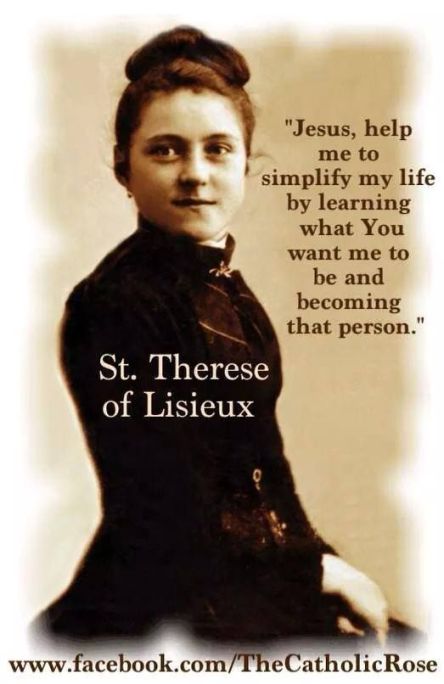
When we agreed to do this, I seriously thought we would be so bombarded with questions that we would not have had time to answer all the questions. Au contraire! As my guide and mentor friend Therese of Lisieux would say, “O happy failure!”
The Christian life is so deep, there’s no way we can exhaust and clarify all there’s to say about it. After years of explaining the faith to communities he established, the great St. Paul exclaims, “Oh, the depth of the riches of the wisdom and knowledge of God! How unsearchable his judgments, and his paths beyond tracing out!” (Rom. 11:33). So, it cannot be true that we have nothing to say about this depthless ocean.
 Asking these questions means they are looking for something deeper. It means they don’t want to settle for superficiality. They want challenges and adventures, ways to reach greatness, a better option, empowerment, guidance and mentoring etc. They want something that can prepare them for the future. They want truth, the real thing. As Pope Francis puts it, “they don’t want to be young people who nod off, who are drowsy and dull; they don’t want to be young “couch potatoes”, but young people with shoes, or better, boots laced. They want to leave a mark their territory.” So, it is a crucial time in their lives. Let us together give them the best tool for the future- Jesus.
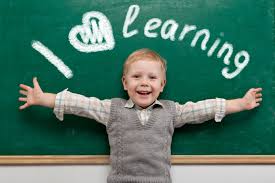 Be committed and disciplined. A new day is dawned in the life of a student when he recognizes that even if he doesn’t have the highest IQ, a photographic memory or special talented, he can still be seated among the best. With discipline and commitment, studying can be truly enjoyable. In fact, they are the master key that opens all doors. Mastering them makes one a virtuous learner. All right thinking individual urges the cultivation of virtue — “good habit of the mind, by which we live rightly, of which no one can make bad use, which God works in us….” (ST I-II, Q. 55, art 4). Aristotle urged striving for excellence. St. Paul exhorts us to think only about ”whatever is true, noble, right, pure, lovely, admirable and praiseworthy” (Phil. 4:8). All the saints, all successful historical figures and all meaningful accomplishments have taken discipline and commitment. Choose a specific time to do your studies. Commit to it wholeheartedly. Practice makes perfect. Practice allows us to master a skill until it becomes second nature to us.
 Learn to fall in love with learning. Let me make this point through an example. Take Itzhak Perlman, a Jewish composer who won 15 Grammy and four Emmy awards. He is said to be a genius performer and a “god” of music. It is reported that he has practiced daily for nine hours. One day, he put on an extraordinary performance at a concert in Vienna; afterward people came to greet and congratulate him. One member of the audience who was wowed by his performance said to him: “I would give my entire life to be as great as you are.” Perlman responded: “I have.” He has given up everything to follow this one dream. Today, he is on top of the world. How did he get to be so great? He hungered to be good at it.
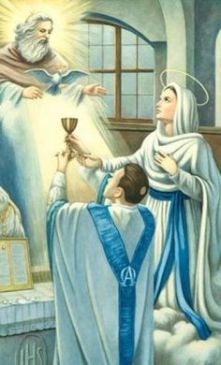
 It is often said that behind every great man, there always is a great woman. This certainly has come true in Jesus and our Blessed Lady. Just like a mother is always crucial for the kind of person a child becomes, Mary is vital for the kind of priest a man becomes. As we continue to reflect on a “Year with Mary, our Mother” as a Diocese that Bishop Tobin, it is fitting to ask: what can she teach priests?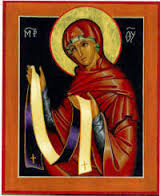

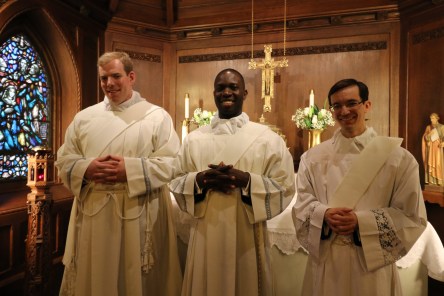
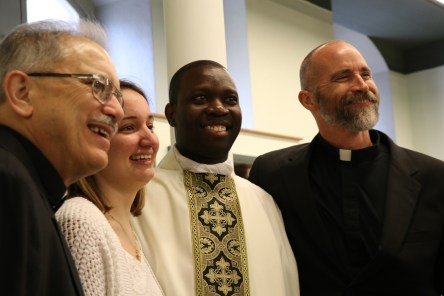
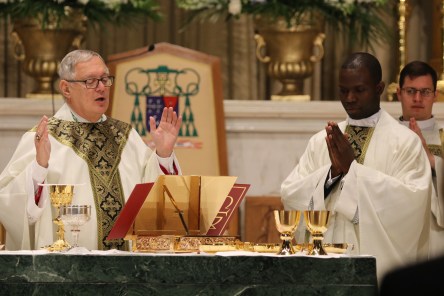

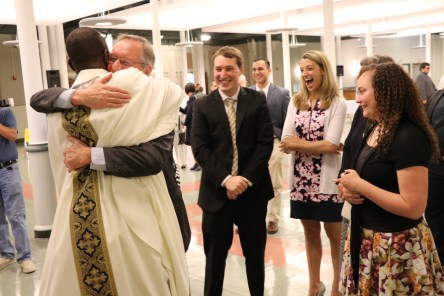
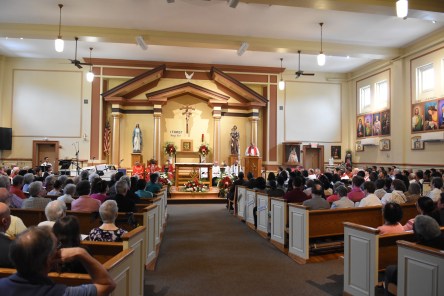
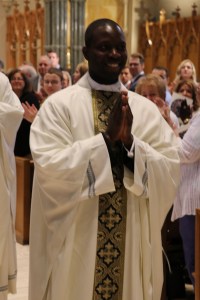
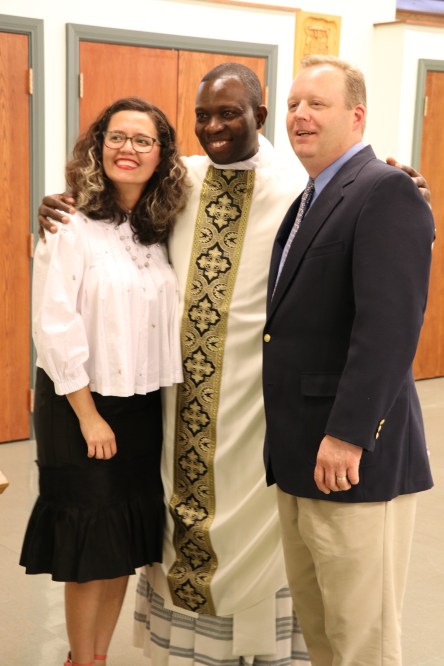 When they fall away from grace, they are reconciled with God in the sacrament of penance through the hands of the priest. Called to found a family, the priest is there to receive and bless this unitive and procreative love. The priest stands by them in the best and worst periods of their lives—new life, fears, doubts, concerns, sadness, troubles, or celebrations. He coaches them about how to win the race and fix their eyes fixed on Jesus, the goal of human history, the focal point of the longings of history and of civilization, the center of the human race, the joy of every heart and the answer to all its yearnings (Gaudium Spes 45). Most importantly, behind the scene, in supplications, fasting, penances, study, hours on his knees, he prepares himself daily to live up to the lofty promises he made at ordination before God and his people. So, Out of gratitude and love the faithful come out in droves to celebrate and welcome the new priests as a way to tell them: “welcome them to our lives. We are glad you are here. Show us the way.” That’s what the ordination meant to me.
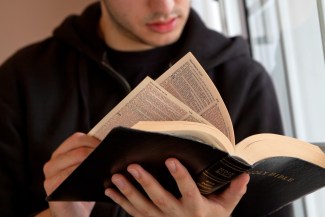 Do you want to understand who you are? Do you want to know your own story even before you live it? Do you want to see the human race in his beauty and ugliness and foibles, at his best and worst, acting like an angel today and behaving like a beast tomorrow? Then read scripture. There you will meet David — a man to whom God gives everything — pleasure, power, honor and wealth, yet he took a poor man’s wife and murdered him (2 Sam. 11-12:1-14). There you will learn the story of the Israelites — taken out of Egypt by God’s strong arm. Yet during 40 days without Moses to remind them of the word of God, they turned to idols (Ex. 32-34). There you will see what happens when people abuse their God-given power in the story of Naboth, Ahab and Jezebel (1 Kings 21). There you can meditate on the consequences of associating with those who cultivate no fear of God (1 Kings 11), discover the towering power of an unwavering faith in Susanna (Dan. 13), and ponder the depths of God’s mercy in the story of the prodigal son and the woman caught in adultery (Luke 15: 11-32; John 8:1-11). Scripture is our personal story. In it, we find ourselves.
 Would you like a complete guide for the 3 fundamental relationships that form the basis of life — God, neighbor, and ourselves? Look no further than the Bible. It provides the wisest and most prudent way to act with the wealthy when you are poor, with the young when you are old, and with authorities when you are a subject. What should we look for in a spouse? What is the regiment for a blessed and fruitful marriage? We only have to read the Books of Sirach and Proverbs to find out. Who am I? What am I afraid of? What should one do to attain eternal bliss? Only scripture tells us. How does one win friends and influence people to the right course of actions? That’s in scripture too. It is no doubt that the Bible is a library. Everything is in there. Read it in family, and among friends; treasure it; memorize it. That’s the recipe for a happy life.
 We forget easily. Interestingly, one of the most common phrases in the book of Deuteronomy is, “Remember O Israel, do not forget.” The human mind is darkened as a result of Original sin; our ability to remember God’s word is a perpetual struggle, and our desire to submit to it is weakened (cf. Rom. 7: 18-19). The remedy against this is to turn it into a habit. Constantly going back to scripture, analyzing it, mediating on it and contemplating allows it to sink in and become part of the very fabric of our inner being. Once it becomes ingrained in us, it starts becoming part of our thoughts, words, actions, habits and character. Character is our destiny; our destiny is heaven. Scripture tells us how to get there and the Church empowers us through the sacraments to help us on our journey.
 He maintains that Luther had written 95 theses to show Christianity’s wretchedness, but today only one is necessary— honestly. When we juxtapose the way we are living the Christian life with the one preached in the New Testament, they almost have nothing in common. Official Christianity does not even dare to make clear the requirement of Jesus’ teachings in the new testament because that would bring to light how far removed the two are. We, Christians, live and love in the ordinary human way and so fail to live the extraordinary life that Christianity requires of us. Diognetus had written a letter to Christian in the third century. in it, he remarked that although are similar to other men by nationality, language or customs. They do not inhabit separate cities of their own, or speak a strange dialect, they are distinct by the way they lived. This is no longer true unfortunately. and the consequent is dire.
 Today, that standard is lost because we’ve gotten too comfortable over the years. the world has re-conquered the low standard in which it was living before Christianity blossomed. They are winning big time and the powerful force that is Christianity is sleeping. Until we wake up, Kierkegaard’s voice will keep on echoing on our cathedrals, churches, chapels, seminaries, schools, and workplaces. Until then, his voice will continue to resound in our deepest conscience that this Christianity is too far removed from the one preached in the Bible.
