We are not allowed to fail in loving. We are made to love. Every learning, experience, study should deepen our knowledge and will to love. We will be judged on love. So, as the church is looking for new ways to spiritually re-awaken the faithful who are drunk with the wine of secularism and indifference, it is only if we teach them how to love concretely that they will be sobered up. Who but St. Therese is better fitted for that task since it was she who brought to light the idea of doing small things with incredible amount of love. Therese of Lisieux is the saint of love. Although all the saints became saints as a result of love, it is Therese who emphasized for us how to practice love. What is her understanding of charity?
She believed Jesus’ command at the Last Supper — love one another as I have loved you— constitutes the Magna Carta of our faith. How we live this reveals our identity.[1] She noticed that Jesus did not love his disciples for their natural qualities; they were poor uneducated fishermen while he was eternal wisdom. He loved them because he wanted them to enjoy the kingdom. We too must become students in the school of love and master every aspect of it in our striving to become true disciples. Thus, she discovered a new insight about charity. “True charity consists in bearing with the defects of others, in not being surprised at their weakness, but edified at their smallest virtues. Above all I know that charity must not remain shut up in the heart, for “No one lights a candle, and puts it in a hidden place”.”[2] That means we must be charitable not only to those who are dear to us, but also to all without distinction. Unlike the old law which commands us to love our neighbors as we love ourselves, the new commandment given by Jesus urges us to love them as Jesus himself loves them i.e. more than ourselves.[3]
Marred by weaknesses and imperfections, unless Jesus loves in us, we cannot love others as Jesus loves us.[4] Thus grace becomes the epicenter of this commandment; grace empowers us to do what we would not otherwise be able to do on our own. So, frequent participation in the sacraments becomes crucial because they are the source of grace. As Aquinas shows, “the Sacraments are necessary for our salvation since it’s the only healing remedy against the disease of sin”.[5] Since we are living in the age of the new evangelization, if it is to be successful, practical love as developed by St. Therese and the celebration of the sacraments will have to go hand in hand.
Charity is concretized in how we approach every act. As she puts it, “it is not enough [to say we] love; we must prove it”.[6] That proof will happen under trials sometimes. The more united we are to Jesus the deeper we can love. So when we see defects in others, if we look at them with the eyes of love, we automatically see their virtues and good intentions.[7] She called that “small victories in the battlefield”. For example, in the convent where she lived, there was a sister who had the gift of displeasing Therese in her ways, words, and character. She could not stand her. She decides to practice charity toward her because “charity does not consist in feelings, but in works”;[8] she decided to do for that sister what she would do for the person she loved the most”.[9] So every time she meets her, she prays for her. When sister says something that was hurtful, instead of responding, Therese would smile most charmingly, or if she could, she’d change the conversation for as she sees it, “arguments don’t change hearts”.[10] If she could not resist the sister in her hurtful manner, she would run away like a coward to avoid sinning. She became victorious over that temptation through prayer, kindness, and virtuous cowardice. By preferring to see the sister as Jesus sees her, Therese knew she was pleasing Jesus for “just like an artist is pleased to receive praise for his work, the divine artist is pleased when we don’t stop at the exterior, but penetrate the inner sanctuary of his work where he dwells”.[11] Therese practiced that love so well, one day that sister asks Therese, “what attracts you so much toward me? Every time you look at me, you smile”. Success!
 Charity penetrates even the most hardened hearts; it heals even the most wounded; it soothes and frees the soul to focus on its natural inclination. Therese overcomes her temptations by mean of love. Charity changes mind and heart. It opens doors. She focused in growing in personal love, then that affects those around her drastically; love is irresistible; confronting the sister would create more friction and pain. Fraternal correction would only hurt her pride. How many today are wounded, broken, bruised, abused, and used because they don’t know how to love? Instead of detesting that sister, who gave her at first every chance to do so, she prefers to see Jesus hidden n the depths of her soul.[12] Would you like to change a bad coworker, neighbor, friend, unleash the power of love within you and participate in the sacraments very frequently, then wait to see marvel. How many people going to church regularly don’t know how best to live the truth? To be a Christian is the result of an encounter with the person of Jesus; that encounter should give a radical direction to our lives.
What am I talking about? Are there examples out there of that concrete love I am talking about? Maximilian Kolbe manifested that love at Auschwitz when he replaced father of three who was chosen to die. It is alive in St. Gianna Mollo’s daughter for whom she gave up her life. it is alive in those who strive to love the poor. we can touch in parents who sacrifice everything out of love for their family.
Lastly, charity is an interior disposition manifested externally. Performing many actions for others without interiorly disposed is not charity; in her words, “when charity has buried its roots deeply in the soul, it shows itself externally”.[13] So there can be charity in refusing to do for someone what cannot be done. It all depends of the disposition of the soul. Reform your soul. Convert.
This may sound obvious to many; that’s consoling; however there are many who don’t understand this fundamental calling of the Christian life, or how to live out their calling. A simple conversation with them reveals all this. That’s difficult to preach effectively morality, the cross, fasting, almsgivings, praying for one’s enemies, forgiveness etc. to people when they don’t get the basics. Unless they understand love is the basis of all these, unless they become love themselves, these will be a burden on them, and homilies will sound like blah blah blah.
The little way next be patient please
[1] Story of a soul, 219
[2] Story of a soul, 220
[3] Story of a soul, 220
[4] Story of a soul, 221
[5] ST III, 61, 1
[6] 225
[7] story of a soul, 221
[8] Story of a soul, 222
[9] ibid
[10] Story of a soul, 223
[11] Story of a soul, 222
[12] Story of a soul, 223
[13] story of a soul, 228
 This insight into the mystery of God encapsulates the call of every Christian. Love alone allows us to become godlike. From a Christian point of view, it is a noble task to be the mother Teresa of the poorest of the poor; it is praiseworthy to fight for justice like martin Luther king using nonviolence; it is ideal to convert a continent like the religious missionaries of the 16th to 18th centuries. However, unless charity constitutes the cornerstone of this endeavor, it does not leave an indelible mark in The Book of Life. All human inspiration must begin with charity and lead ultimately to greater charity. When she was seeking for her specific call (since she was already a Carmelite sister engaged to pray for priests) within the church, St. Therese of Lisieux discovered a pivotal and illuminating passage in the epistle of St. Paul that points her toward the epicenter of what it means to follow Christ.
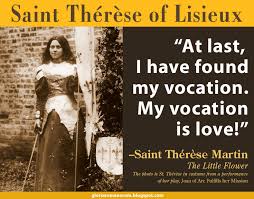 Charity is the breadth, length, height, and depth of all vocations. The heart of the church burns with love, as she understands her. Love is the heart that pumps blood in the body of the church enabling her to function. It is love that makes the heart of the church beats. “If love ever becomes extinct, apostles would not preach the gospel, martyrs would refuse to shed their blood, and priests would become social workers. Love is everything because it encapsulates all vocation. In the midst of this discovery, she uproariously exclaimed “MY VOCATION IS LOVE; in the heart of the church, my mother, I shall be Love”.
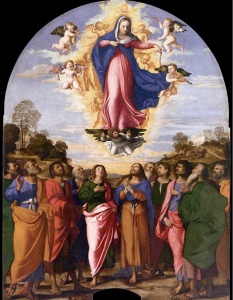 Reflecting on what God had accomplished through her, it is concluded that she is the highest honor of our race. Why? No human beings can deem to be the bearer (mother) of God. No one occupies such a pivotal role in the liberation of a race as she did. No hero or heroine was that crucial in any cause. Our salvation begun as a result her fiat; we could speculate about what would have happened had she responded negatively, but all we know she did not. Because of her, heaven and earth, God and human had come together. By such occurrence, the human race that was galloping in the direction of hell makes a U-turn. The church never fails to honor her for playing such a powerful role. That’s why we dare call her Mediatrix, Co-Redemptoris of our salvation. That means she was the spark that started the whole fire though she probably did not foresee the consequences of her fiat. God could have done otherwise of course had he preferred it, but he did not and she cooperated with the divine plan. We can all learn from her exemplary life. Don’t we all want to do something heroic, magnificent, and extraordinary? Well, we can. Search for God’s plan and follow it intensely. Then be ready to be amazed.
 Moreover, as the greatest mother who had ever lived, she is a great model of what it means to be an excellent mother, and a teacher to all fathers. To all women, she teaches how to accompany a child as the child is trying to grow in wisdom and age. She let him be, and through that she discovered who he is—do whatever he tells you (John 2). To fathers, she teaches how to treat a child when things don’t go as planned. Finding him in the temple, notice how she did not yell at him, but rather she asked him a question— Son, why have you treated us this way (Luke 2:48)? Joseph stands there and observes how she does it. we men don’t handle things this way. Another lesson is that in our attempt to help those who need help in this journey, she is a great example of how best to do so— never in a nagging or imposing way. She teaches us that asking questions, attentive listening go a long way.
 The church is in the business of reintegration not casting off. She is always ready to pour out the balm of God’s mercy on all those who ask for it with a sincere heart (Amoris Laetitia 296). So, if someone exhibits a way of life incompatible with the Christian ideal, that person needs to let the gospel penetrates his life so he can experience conversion. Pastors of souls are there to help through that process. that simply means there will be a lot of new beginnings and fall start. The church’s role is simple to patiently stand alongside each person as they keep on trying. Again, this is the first time a church document dealing with doctrine is juxtaposing doctrine and spiritual growth.
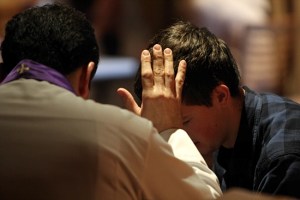 Without falling into casuistry, the document cleverly maintains that not all divorced and civilly remarried can be pigeonholed as one. There must be “a renewed encouragement to undertake a responsible personal and pastoral discernment of particular cases since the degree of responsibility is not equal in all cases”. Therefore, priests have a duty to initiate a process of accompaniment and discernment in order to “guide the divorced and remarried to an awareness of their situation before God (300). A pastor cannot feel that it is enough simply to apply moral laws to those living in “irregular” situations, as if they were stones to throw at people’s lives (305).
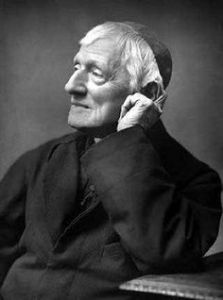 t preserve the essential form and structure of what came before it. It is genuine if it retains one and the same type, the same principles, the same organization; if its beginnings anticipate its subsequent phases, and its later phenomena protect and subserve its earlier; if it has a power of assimilation and revival, and a vigorous action from first to last. By the same token, butterfly can be seen as a genuinely development of caterpillar. While butterfly is not the same as a caterpillar, it preserves the essential form and structure of a caterpillar.
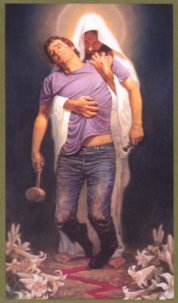 We know this is true instinctively; on one hand, we can enter into the depth of ourselves through silence and prayer, becoming as much like the angels as possible. On the other, we experience instincts and emotions that often get the better of us. as long as we are journey in this life, we struggle to strike a perfect balance between these two realities.


 After the peasant and naïve girl Lucia was kidnapped, she fervently turned to our Blessed Lady for help. Being a merciful mother, she helps her not directly, but by changing the lion heart of her captor (the Unnamed) into a little lamb. That is the only reasonable explanation behind his tormenting heart once he accepted the task of kidnapping her. He gets angry with himself for accepting; a sort of remorse and disquiet settle in his heart; the memory of past crimes start to emerge.
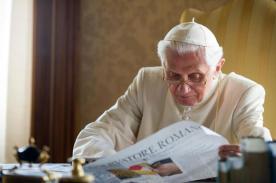
 An encounter with God is life-changing and ensues a better future. As pope Benedict puts it, “one who has hope lives differently [because he] has been granted the gift of a new life.
 The cardinal suggests that this visit could only be good news that God has touched his heart. However, the Unnamed asserts that there cannot be good news when hell is raging in his heart. “Where is that God anyway”.
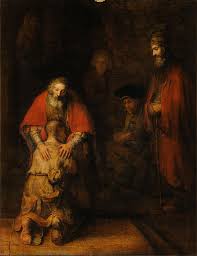 In conclusion, in case we forget what the church does, this conversion is how the church relates to the world. She is a mother who never disowns her children regardless of how low they have fallen into sin. As long as they turn around and return home, her arms are wide open waiting to hug them. That’s what the church does for every sinner; he should seek them out. That’s what the new evangelization is about—seek the lost, and if she does not, when they return, her doors are always wide open. The sins of one sinner affect the whole. So when one sinner is converted, the whole benefits. The bigger the sinner the more beneficial it is for the common good. The whole benefits when one person decides to embrace a holy life. Although it is the task of the state to establish peace and security by means of power, conversion of heart is the most powerful way to establish peace and security. Only the church can establish it in such way. The cardinal had thus done well to receive the Unnamed with such open arm given the threat he was for society at large. He was saved and I suspect many of his household will also be saved with him.
 Governments cannot solve the world’s suffering. Despite the scientific and technological advancement, material and spiritual suffering will always linger (ibid 30a). Through the inescapable sense of solidarity, through their commitment to love, both material and spiritual sufferings are alleviated. Church agencies can especially serve as a reference point and inspiration for civil society on how best to serve the poor. Through this cooperation, it becomes clear how faith enlightens reason in its work all the while remaining above politics. Consequently, Christian charitable activity is free of parties and ideologies.
 Man’s greatness is intrinsically bound to God. Man cannot be redeemed by science for he cannot be rebuilt from outside.
 A sincere, genuine, effortless laughter is irresistible. Who does not like a person with an easy laugh? Who can be unmoved before the laughter of an innocent child? Who does not throw a smirk when he sees or hears a loud, deep, joyful laugh? It can bail a person out of anything. Ingrid Betancourt, a French journalist who was held in captivity for 6 years by the Columbian guerillas, asserts “I knew of no instruction manual for reaching a higher level of humanity and a greater wisdom, but I felt intuitively that laughter was the beginning of wisdom, as was indispensable for survival”. Apparently laughing was the only antidote to her misery in the jungle. She chose laughter in the midst of darkness and light was found. So laughter can empower us. In this sense comedian Craig Ferguson is right: “You gotta laugh because if you didn’t, you’d cry”. Laugh! It will change your interior disposition and your thoughts. Laughter gives rives to a new you—new world, new perspective, and new horizon. Learn to laugh and do it often. Cultivating a cheerful disposition is the most conducive mean to laughter.
 I hope this did not start a negative view of laughter in your mind. I only wanted to present both sides. As you know, nothing good exists without a good rule. Self-control is the rule by while laughter is measured. A cheerful and joyful heart is a peak into the eternal chamber of God. God has a good sense of humor as we often say. It is believed that if we could grasp the universe as it truly is, we would have to laugh because it would be interesting seeing the divine wisdom behind it all. That’s why holy people who get a privileged glimpse into God’s mirror always have a good sense of human. They see purely and it is humorous.
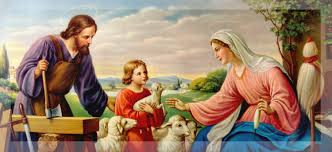
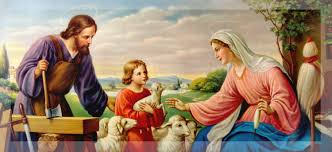 The Mother of God is elevated to the highest pedestal attainable by a human being. She deserves this because her life on earth matches the blueprint in God’s mind; she is, and deservedly so, the highest honor of our race and the mother of our salvation. This honor is due to her fiat and her intrinsic connection to the divine Son of God. She is Theotokos— God’s bearer—and the mother of all mankind. However, something would be amiss if the Son of God was deprived of a father. Thus Joseph occupied a pivotal place in the economy of salvation. He is the second greatest saint in the eyes of the church. He was handpicked to fulfill a primordial role.
 However, this role was not a walk in the park. Like Mary, he was not given a special grace from birth to be the father of God. He was a sinner striving to be virtuous. So it was not easy for him to deal with mystery, so he must have struggled to accept the angel’s annunciation to him. Someone being pregnant through the power of the Holy Spirit is mind blowing and unprecedented. Although a man of faith, he could not have swimmingly accepted this occurrence. To make things worse, out of all the possible mediums, God chose a dream to announce the greatest of news. Sheer madness, however that’s God’s madness. Madness that comes from God is much more beautiful than wisdom of human origin. Despite all the researches done on dream, we still don’t know how best to take dreams. So human that he was, he struggled to decipher what was being asked of him. When things come to light however, he cooperates wholeheartedly. That’s a lesson for all of us. It is reasonable to struggle to figure out God’s plan for our lives, but once evident, leave no room for doubt. Commit as if there had never been any doubt.
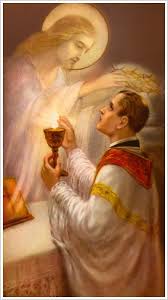 Moreover, Joseph teaches the priest how to deal with mysterious phenomena. Joseph was human dealing with God’s mystery (Jesus) and the greatest human (God’s spouse). The priest is a human being dealing with God (the Eucharist) and fragile souls that he must save. As eli the prophet once remarked when his sons were mishandling the sacrifice of the temple: “If a man sins against another man, God can mediate for the guilty party. But if he sins against the LORD, who can intercede?” (1 sam. 2:25).
 Joebricereview