What do all successful CEOs, athletes, authors, scientists, inventors, or anybody who made it have in common? What do Steve jobs, Michael Jordan, Dante Aleghieri, Louis Pasteur, Leonardo Da Vinci have in common? We often forget that they were not born famous, wealthy, and successful. We forget they were once unknown and unimportant. We tend to forget about their hard work, the setbacks they encountered, and the determination they showed before they got to stand on the pinnacle of the world’s cathedral. It can help us if we remember that they failed just as you and I have and will. They knew setbacks, dark nights, the bottom, and bitterness. The difference is whenever they fell, they dust themselves off and try again. They learned from their failure and moved on to the next challenge.
What makes them stand out? Why are their names on everyone’s lips today? The answer lies in their ability to remain focus on the goal. FOCUS is what they share in common. It is ingrained in their personality and honed in their DNA. They persevered despite thick and thin. And at the end, they win the prize. Perhaps, their advice can help us on our own journey (whatever that journey is).
Take Jerry Seinfeld for instance. The first time he went on stage, he was booed, ridiculed, and humiliated. What did he do? He went back to that same theater next time with renewed confidence and better prepared. He stayed at it. He kept the fight, and he won the war. It is inevitable that we lose some battles. But it is contingent on us to win the war. We learn from the losses and use them to win the war. Life is a battleship; those who survive are heroes. As someone once said, “the rule of life is tough, but once you reach the top, the view is pretty amazing”. So what does Seinfeld learn from his failure? “Keep your head up in failure and your head down in success.” Courage and focus make him one of the most beloved comedians on television. Failure then is part of the game. As Janet Fitch eloquently says it: “The phoenix must burn to emerge.”
Another inspiring figure is the British author J.K. Rowling, whose brilliant writings we have grown admiring through the Harry Potter movies. She knows what it means to give herself to the one thing that matters. Once she discovered the one, it grabs her whole being. Once she found the pearl, she sublimates all her energy to it. This is how she expressed her attitude at a commencement speech at Harvard university: ”… I stopped pretending to myself that I was anything other than what I was, and began to direct all my energy into finishing the only work that mattered to me. Had I really succeeded at anything else, I might never have found the determination to succeed in the one arena I believed I truly belonged.”
Know this: those who don’t fail are those who don’t try. Failure can be the wings upon which you reach success. Don’t be afraid to ride on it. Many seem to thrive on it. It motivates them to keep on improving. Michael Jordan has an outstanding take on failure. The best basketball player in NBA history, the legend, the champion has lost many games, missed many shots, but he used them to win five championships and a handful of MVPs. As he puts it: “I’ve missed more than 9,000 shots in my career. I’ve lost almost 300 games. 26 times, I’ve been trusted to take the game winning shot and missed. I’ve failed over and over and over again in my life. And that is why I succeed.” He failed and that motivates him to improve.
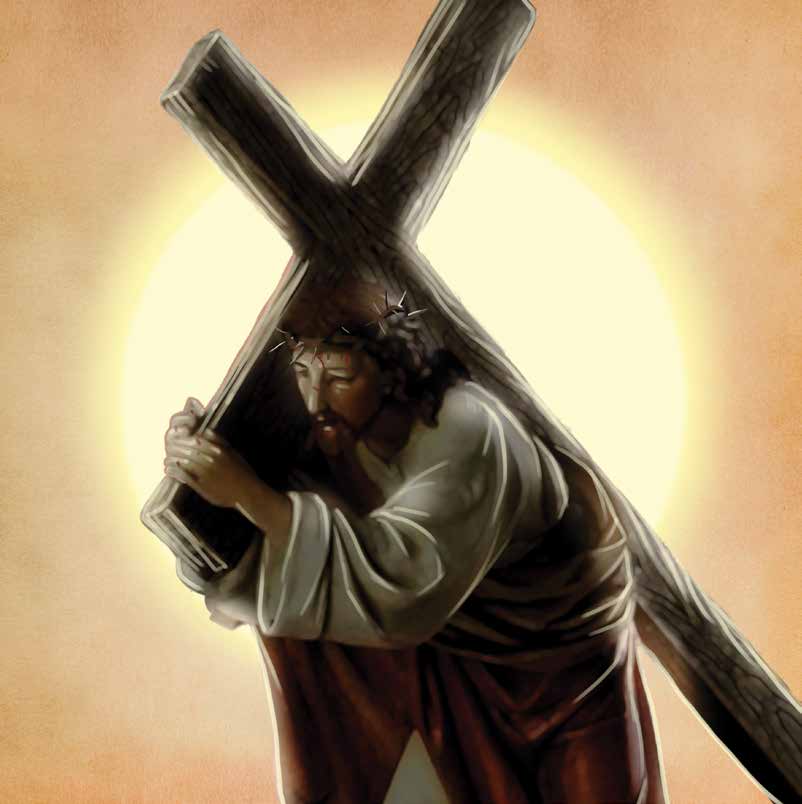
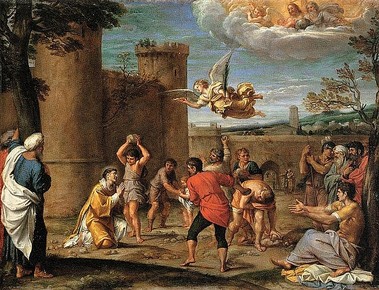
 What to say of the most successful person in human history, Jesus Christ, the son of Mary and Joseph? He asked the father to take away the cup from him. 3 times he fell on his way to Calvary; he endured 480 strokes, nailed to a cross, beaten beyond recognition, and humiliated to death. He persevered to the very last breath. The result is astonishing and magnificent, astonishingly magnificent, and magnificently astonishing; “I have made all things new”; the whole human race is redeemed. Creation is restored. Greatest success than this there is none. By the power of Christ crucified, we can do all things. No mountains are too steep for us. so in our efforts to be a a more virtuous person, a holier Christian, a better teacher, parent, child etc. We will know setbacks and many dark moments, but we can use them for our benefits. Focus. “Let us run with perseverance the race marked out for us, fixing our eyes on Jesus, the pioneer and perfecter of faith” (Heb. 12:2). Pray for the grace to stay focus. There will be noise around you; there will be distractions; there will be threats. Just keep your eyes on the goal. Focus on the one thing you know you can do. Fail at it. Try again. Do better the second time. The only people who never tumble are those who never mount the high wire.



 The teenage years are a fragile period in life, yet more probably happens during this period than all the other periods. The moment we attain the age of adolescence, we have to choose a college, a major; that means leaving the bosom of our parents for the first time. It is an exciting time, but it is also full of unknown. The key to independence from parents is wide open. Peer influence and acceptance become very important at the same time. Also, the bodily hormones don’t help the cause either (you know what I mean). More importantly, it is also the time when the church asks them to make a commitment to the faith through the sacrament of confirmation. Thus, indubitably, the teenage years are the hardest stage of our development. To quote a good friend of mine: “it is hard to be a teenager”.
 At that stage of life, life’s most crucial questions such as what should I do with my life? What should I do to be successful, loved, and happy? What’s the meaning of all this? These questions become the most vivid. They demand that answers are articulated, and yet no answers make sense yet. So while it is necessary to let them to figure things out on their own, but not without guidance. Not bossy guidance, but good people they can trust. They are bombarded with all kinds of temptations, so they flirt with failure on a daily basis.
 First, get a mentor. Have an older person who can advise you, and you can look up to. This is the best gift you can give yourself. Let’s face it. You have to do a lot, but you don’t know a lot. You probably have a lot of potential, but you have no experience. So if you are to make fruitful choices, you must have a guide. That mentor can be a parent, a friend, an aunt/uncle, your pastor, or a teacher. Get someone! Get someone who inspires you to be the best version of yourself, and someone who will challenge you if need be. Be honest with him/her.
 Second, befriend books. As the adage goes, “those who read lead”. Make it your goal to read something daily. Magazine, newspapers, online stuff don’t count as part of your daily reading. Reading allows your thinking and verbal skills to develop. Your young mind is open to endless possibility. Be careful what you feed it with. A young age is the time to increase your vocabulary repertoire. The more you read, good words automatically stay with you. Interestingly, reading makes you more attractive and fun too. You don’t want to be a boring conversational partner. The brain is flexible and produces good thoughts through reading. Reading enables you to engage a variety of people in conversation because your brain is well fed.
 Lastly, pray. If God exists and created you, he probably has a plan for you. It is fitting that you ask him unabashedly what that plan is. Confidently ask God to reveal the path of life for you. Only in God through prayer do we overcome uncertainty, find real meaning to life that we are desperately looking for, curb our passions that declare a war on us, and find light in decisive choices. Prayer is your best bet. Deepen it.


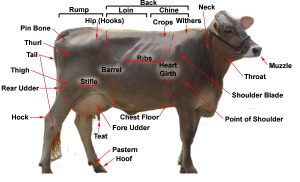 Moreover, our human uprightness, which is due to our form, allows us to relate to our world. As Aquinas asserts it, it is fitting that man possesses an upright stature (ST I, Q 91, reply 3). Further in this same reply, he says that due to his erect stature, man’s superior part (the head) allows him to turn toward the superior part of the world (heaven), and his inferior part turns toward the inferior part of the world. Our uprightness, in the word of Kass, is reflected in every detail of our deep structure. The way we are shaped and formed allows us to experience the world in a manner different from all animals. Even though they and we are experiencing similar objects, we respond to these objects exponentially different. As Strauss asserts through Kass, “upright posture pre-establishes a definite attitude toward the world”. As Aquinas would have it, our structure permits us to better accomplish our proper end (ST I, Q 91, 3).
 For instance, a deer looks a person in order to detect whether or not he is a potential danger. We, on the other hand, look so as to see to behold and discover something new. Being a detached beholder gives us the capacity to search for the true, the good, and the beautiful through our seeing, imagining, understanding, pointing etc. Looking disinterestedly opens us to see things the way they really are without seeking closeness, nor remoteness, nor unification, nor separation. We must keep in mind that we are capable of performing these activities on a consistent basis only due to our inwardness— the form.



 Grace yourself 15 minutes of silence everyday, and you will soon drink at the fountain of her delight. It is the most generous gift you can give to yourself. Disconnect— from electronic devices and people— to simply be quiet with you, yourself; I mean your self. It may be frightening at first, but it is needed if you are to find the right direction in/of life. It is going to be tough at first, but stay with it. Struggle with it. You can do this! All kinds of ideas are going to come rushing in your mind, dismiss them.


 What none of these worldviews takes into account is the fundamental truth that the world was perfect until we came into it. So the problem lies in us. We were made to be in relationship with our creator. Life will always be off balance, and no solution will be found until we accept that without God in our life, we cannot espouse a proper worldview. We cannot forge a sound worldview because we are by nature corrupt. We need help, divine help. To fix the problem, we must fix our broken selves.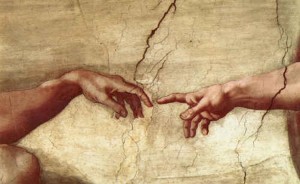





 Joebricereview