Holiness is the birthright of the church’s life. The nearer a person is placed to the church’s reservoir of sanctity, the more that person is obligated to live it according to how the church conceives it. One’s sanctity is confirmed in, by, and for the church; otherwise, it is madness. An individual is not left to choose the way in which he will lay down her life for Christ outside the circle of the revealed truth. However, the church unabashedly urges the faithful to pursue their vocation because she believes that each person is unique and made for a unique vocation. As Von Balthazar puts it, “for each Christian, God has an sublime, unique, and personal Idea and fixes his place within the membership of the church”.[1] The fulfillment of God’s will is to enter into this plan; that’s the gateway to the happy life insofar that’s possible in this life.
Observing the life of the church through the way the saints had lived it, two types emerge. On one hand, we have the typical type who lives the Christian revelation through the normal, ordinary, and unspectacular way. They blossom in the garden of the church and adorn her with their fragrant and eloquent beauty without adding new colors. Most of the saints belong to that category. On the other hand, we have the big guns, bigger than life. They don’t follow the status quo, and yet they are not heretics. They were handpicked as a vessel of election for something unique, spectacular, and unprecedented. What these big fish do left the “small” saints stagnate in mediocrity as if they have done nothing. Their mission flashes across the dome of the church like lightning from heaven and lights up some specific and unique aspect of revelation unknown beforehand. History and time confirm their works as a necessary rock to the edifice of the church. What they do and say are irrefutable, beyond question, and they are prime members. We call them doctors of the church. There are only 33 of them.
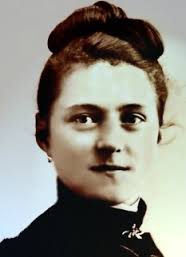 Let’s look at St. Therese of Lisieux for example. Died at 24, never went to college, cloistered at 14, yet was canonized only 25 years after her death, and now stands as a doctor of the church. She displays the marks of a very defined and exceptional character. Though she had never left the cloistered walls of Carmel, in 1927, she is declared the patroness of Missionaries alongside a towering figure like St Francis Xavier, who brought the Gospel in Central America. In the homily declaring her a doctor of the church, John Paul II states, “when the Magisterium proclaims someone a doctor of the Church, it intends to point out to all the faithful that… the doctrine professed and proclaimed by that person is a reference point. That means it not only conforms to revealed truth, it also sheds new light on the mysteries of the faith, and gives deeper understanding of Christ’s mystery” (3).
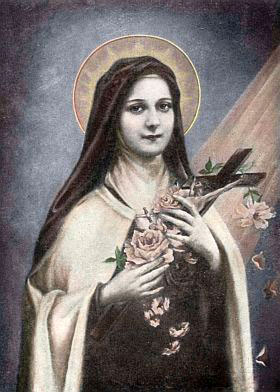
What did St. Therese do worthy of being the patroness of missionaries? What is the doctrine upon which she shed light? After receiving a special grace on Christmas Eve 1886, she became animated with a great zeal and ardent desire for souls. “Like His apostles,” she writes, “I have fished all night and caught nothing. [At last], more merciful to me than the disciples, Jesus took the net. He made of me a fisher of souls. I experienced a great desire to work for the conversion of sinners, a desire I hadn’t experienced so intensely before”.[2] So when she was asked why she is entering Carmel, she answered, “I came to save souls and to pray for priests”.[3] She will spend the rest of her life in contemplation of the cross of the Lord, and so doing beg the Lord to save and convert sinners. However, it is how she conceives her time in heaven that bestowed the worthy name of being the patroness of missionaries. It is that same understanding that makes John Paul say that she “shed new lights of the mystery of faith”.
What is heaven for St. Therese? She has always been absorbed in the present moment of God’s grace. She lives out of love, through love, and for love; she lives a love that’s not her own. She participates in the very love of God. love is not bound by time. Consequently, she has no difficulty interpreting the laws of the next world in the term of the circumstances surrounding her love in this world. There’s no difference between her mission in this world and that of heaven. It will be similar when she’s in heaven. Out of love she was praying for priest and the salvation of souls, so that same love will spur her on in heaven. She vowed not to take rest in heaven. “When I die, I will send down a shower of roses from the heavens, I will spend my heaven by doing good on earth”. That’s how she will take care all souls and missionaries scattered throughout the world. Wait! Is heaven not eternal rest anymore? For her, the good God would never inspire her with this desire unless he meant to fulfill it after her death. Clearly, she cannot do it before her death. It has got to be in heaven. As von Balthazar puts it, “it is as though heaven is a garment that has to fit her”.[4] She knows the measure of her unconditional love. The next world must be compatible with it. She is convinced that she will not be inactive in heaven. On her deathbed, she asserts that if “I am leaving the battlefield, it is not to seek repose”.
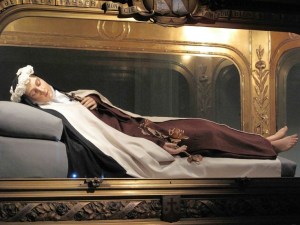 Although that may sound unorthodox to pious ears, this understanding of heaven as restlessness echoes some of the church Fathers’ view. We must not be selfish; in heaven, we are no longer wayfarers, so we can focus on helping those striving to get there. The idea that heaven is eternal happiness where all movements cease and we rest in God after the restlessness of this world does not fit the infinite depth of God. As she saw it, heaven is eternal love not eternal happiness because love, which is infinitely richer and deeper than happiness, more fittingly defines God’s being.[5] The greatness of this claim resides not because it comes from a great saint, far from it, it gives us food for thought because she had lived it herself.
It is within this backdrop that she is made patroness of missionaries and doctor of the church. That signifies that if she actually follows through with her plan, all missionaries under her tutelage will be successful. If they are successful, that’s something we had never thought was possible. That’s a breakthrough for us in our effort to understand the exhaustible economy of revelation. If all the above are true, she deserves all titles she receives.
[1] Von Balthazar, Therese of Lisieux, intro p xii
[2] John Clarke, the autobiography of st therese of lisieux, 3rd ed. P98-99
[3] 149
[4] von Balthazar, therese of lisieux, 31
[5] Von Balthazar, 33






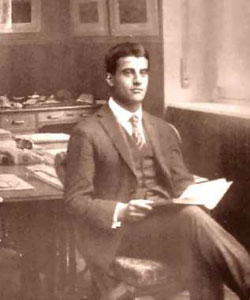





 The teenage years are a fragile period in life, yet more probably happens during this period than all the other periods. The moment we attain the age of adolescence, we have to choose a college, a major; that means leaving the bosom of our parents for the first time. It is an exciting time, but it is also full of unknown. The key to independence from parents is wide open. Peer influence and acceptance become very important at the same time. Also, the bodily hormones don’t help the cause either (you know what I mean). More importantly, it is also the time when the church asks them to make a commitment to the faith through the sacrament of confirmation. Thus, indubitably, the teenage years are the hardest stage of our development. To quote a good friend of mine: “it is hard to be a teenager”.
 At that stage of life, life’s most crucial questions such as what should I do with my life? What should I do to be successful, loved, and happy? What’s the meaning of all this? These questions become the most vivid. They demand that answers are articulated, and yet no answers make sense yet. So while it is necessary to let them to figure things out on their own, but not without guidance. Not bossy guidance, but good people they can trust. They are bombarded with all kinds of temptations, so they flirt with failure on a daily basis.
 First, get a mentor. Have an older person who can advise you, and you can look up to. This is the best gift you can give yourself. Let’s face it. You have to do a lot, but you don’t know a lot. You probably have a lot of potential, but you have no experience. So if you are to make fruitful choices, you must have a guide. That mentor can be a parent, a friend, an aunt/uncle, your pastor, or a teacher. Get someone! Get someone who inspires you to be the best version of yourself, and someone who will challenge you if need be. Be honest with him/her.
 Second, befriend books. As the adage goes, “those who read lead”. Make it your goal to read something daily. Magazine, newspapers, online stuff don’t count as part of your daily reading. Reading allows your thinking and verbal skills to develop. Your young mind is open to endless possibility. Be careful what you feed it with. A young age is the time to increase your vocabulary repertoire. The more you read, good words automatically stay with you. Interestingly, reading makes you more attractive and fun too. You don’t want to be a boring conversational partner. The brain is flexible and produces good thoughts through reading. Reading enables you to engage a variety of people in conversation because your brain is well fed.
 Lastly, pray. If God exists and created you, he probably has a plan for you. It is fitting that you ask him unabashedly what that plan is. Confidently ask God to reveal the path of life for you. Only in God through prayer do we overcome uncertainty, find real meaning to life that we are desperately looking for, curb our passions that declare a war on us, and find light in decisive choices. Prayer is your best bet. Deepen it.
 Joebricereview