WHY DO GOOD PEOPLE DO BAD THINGS?

The human person is fundamentally good, but sometimes he does bad things. That view underlines the works of all philosophers, historians, poets, theologians, scientists, and artists. They all sing, write, or speak about that veracity in one way or another. Their works unanimous point to our fallible nature and they all argue that discipline is the most efficient remedy to that malady; our nature must be ordered according to virtue for it tends to do both the good and the bad.

Image

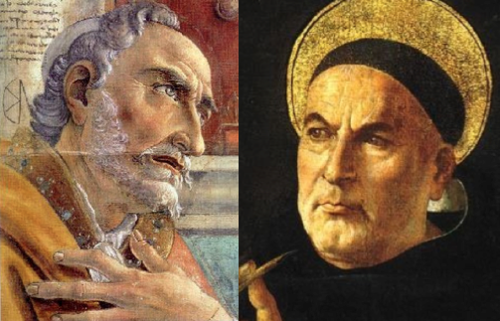
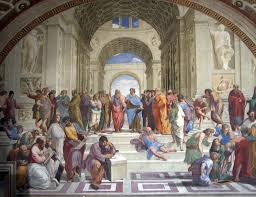
           Life is an eternal fight to overcome temptation. Augustine attributes this reality to original sin where life is both a grace and a crippling burden. The latest sociological and psychological developments have given an even darker lecture to this reality: “no one stands taller than the generation in which he lives”, or man is the product of his time. Therefore, a good environment is necessary in order to not spin out of control. In the Republic, Plato presents us with the tripartite soul: The appetitive soul, it includes all our myriad desires for various pleasures, comforts, physical satisfactions, and bodily ease. The spirited part is the part that gets angry when it perceives an injustice being done. That part can maneuver itself to face adversity; it loves victory, winning, challenge, and honor. The rational part is the one that thinks, analyzes, looks ahead, rationally weighs options, and tries to gauge what is best and truest overall. According to Plato, in order to be as flourishing as we can, the rational part must rule over the other parts. Otherwise, there’s disorder. As if St Paul had read Plato, he describes our nature in language not unless Plato’s. The flesh and spirit roar against each other. “The desires of the flesh are against the Spirit, and the desires of the Spirit are against the flesh” (Gal 5:17). If for St. Paul God empowers us to win the battle against the spirit through faith in Jesus Christ, for Plato, only the rarest and the finest i.e. those who don’t give in to the desires of the flesh, are able to live the good life and so win the battle.

Aristotle beat the same drum as his predecessor Plato in his work called the Nichomachean Ethics. He maintains that the human person, given that he is rational, has a natural drive for human society (‘man is a political animal’), for knowledge (Man is a mimetic animal. he loves to use his imagination), for happiness (that’s innate in every human being), and for God (he naturally knows there’s a higher power that transcends him). The good life is a life that fulfills these natural drives, and directs them to their highest end. Therefore, a life animated by a desire to reach excellence must be cultivated.

ImageThus all these thinkers understand that it is necessary to make a masterpiece of ourselves, but that cannot be achieved without discipline, virtue, or grace; we have to be put in the right “framework”. Right framework—that’s education. That’s conversion. Education is the tool that allows a man to discover the flourishing life. Conversion is the discovery that God is the vine and we are just a branch that cannot bear fruit unless stuck on God. There is no conversion unless we encounter Jesus Christ—the man who shows us what it means to be human. That’s a route to follow another time.

Now consider this. According to the Department of Education, 1 in 3 black men, 1 in 6 Hispanics, and 1 in 20 white men will be incarcerated at some point in their lives. Is it because these people are criminal-minded people? Not at all! The reason is because they are not as well educated as everyone else. They are from the poorest neighborhood in the country where they are exposed to “unwishful occurrences”. The public schools in those areas are considered the worst in the country. Parents are not making enough to send their children in the good schools. Although they are working their hearts off, it is not even sufficient to sustain the family. Of course, that leads to broken home. They are very likely to drop out of school because they have little to no parental guidance. Of course, they are more likely to do more bad things. Of course, these people’s fallibility are higher than everyone else. That’s due to the poverty of their educational level. That’s the single greatest factor that almost always influences their behavior. Have you not checked the education level of the prison population? According to the Justice Department, 79% of prisoners do not have a high school diploma, and 19% of them have never been to school. I am convinced that with proper education, and with the right focus on the family and just employments, our society would be more peaceful; crime rates would plummet, everyone would be safer, and the economy would grow faster.

ImageImage

We are all fallible. We all do bad things, but when we are given the right education, we get to focus on things other than violence. We get to focus on how to materialize that knowledge boiling in the depth of our soul. No other institution understands this better than Manhattan College. They run a program where they allow inmates to take classes in their college. That brilliant idea closes prisons’ doors. The result of their program is unspeakable. Not only does the inmates, upon their release, get to prove to society that they were simply fallible and so not fundamentally bad, but it also benefits society as a whole. The more educated a prisoner is the less likely he is to recidivate after incarceration. Lawmakers should reconsider their motivation to serve the common good. Instead of spending billions to build and maintain prisons, they should instead fight to keep men and women from being imprisoned, and to better insert them to society after prison. That’s only possible through better schools in the poor neighborhoods, and educating the incarcerated. We all enjoy peaceful time. We are all appalled by violence. We all need to stand together to put an end to it. The most efficient way to do this is to empower the family, which decreases the level of fallibility.

WHEN LOVE BEGINS

One of the great achievements of the sciences in the last decades is the discovery that we are free to determine who we become. We are autonomous. While this is true, the aphorism that no man is an island remains true today as it’s always been. We flourish best when we rely on others, especially on God. So in this vein, the human person is most flourishing when he or she is in a relationship with others. God recognized that man should not be alone, and so remedy his situation by providing for him a suitable partner. It is in this partner that he finds his identify. It is in his mate that he discovers that he is meant to live in a relationship. It is this partner that allowed the man to break the silence for the first time. “ This one at last is bone of my bones and flesh of my flesh” (Gen 2:23). Man furthers realizes that his relationship flourishes when he is living in a communion of persons. It is when he gives himself as a total, selfless, free, and reciprocal gift that transcends his very being that he finds happiness.

ImageImage

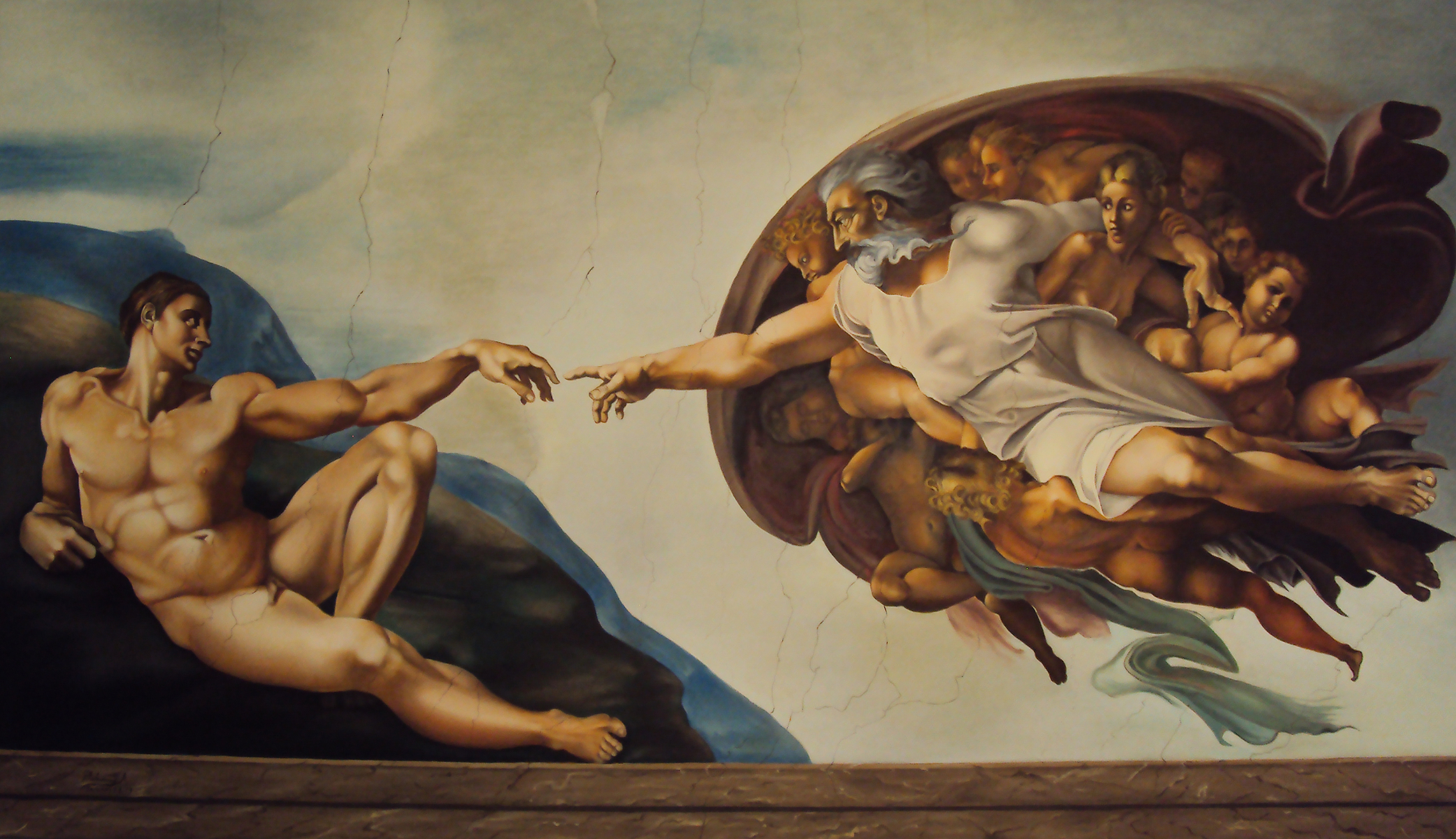
This picture fits man best before the original fall. With the fall, man’s mind and body were opened to disorder. A kind of hiatus is created between he and his creator. It throws a veil before his eyes. He no longer sees the other as companion, but rather as objects to be used. He no longer sees the other as a gift for he can now “see”. He doubts the goodness of the creator and begins to see God as a rival who limits his freedom. He no longer sees his or her human nature as a gift received from the creator. “His communion with the other is transformed into a relationship of domination over the other”. That’s never been the plan however.

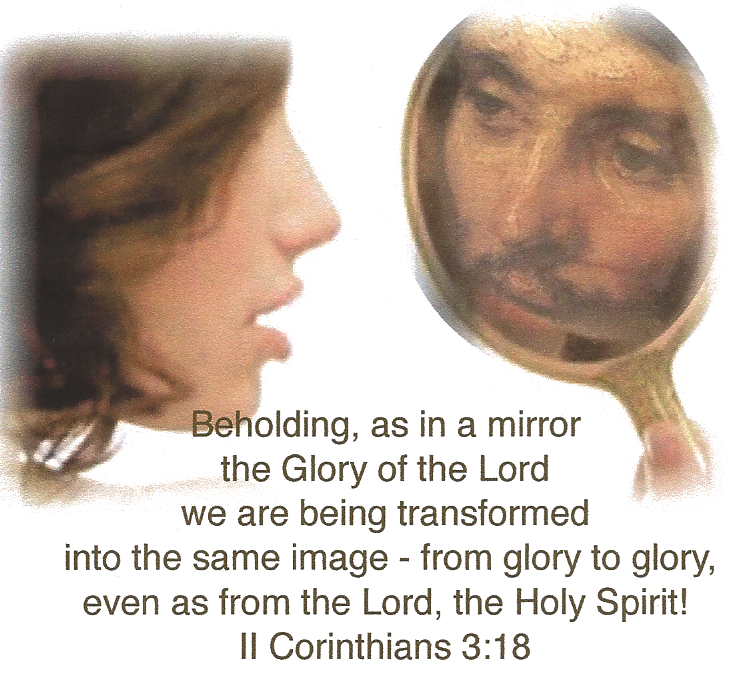
What does all this tell us? There was indeed a time when we were autonomous because we were in harmony with God. That was before the fall. Then we did not see as if in a mirror. Now we must understand that we are not capable of sound choices anymore because we failed. Yes, we are free to determine whatever we want to become, but the fall conditions that becoming. We cannot become something that left its mark on the hearts of others without God. We are free as long as we live and move and have our being in the law of God. So, to truly love in a way that live a scar in the soul, we must be monitored by the author of love himself.

Image

Though the tendency to see the other as an object to be used–erotic love is a reality, but if our lives are monitored by the law established by God, that love will be transformed into agapic love. If struggle there is, if consistency is a challenge, that’s no reason to give up; we must not settle for the basics; greatness is our destiny. To make our life a masterpiece is the goal. That’s achievable not on our effort alone. The man Jesus Christ is our advocate and lodestar showing us how to get there. We need to rely heavily on his grace who epitomizes how we were meant to be and live. He redeemed us from the curse of the fall. We are not autonomous outside of that redeemer. Our self-determination will always be filled with frustration unless we understand that there is no freedom outside of the bubble, so to speak, created by God for us after the fall.

TIME, GOD, AND WE

Christians maintain that the God who sustains the universe into being once became man. That God underwent human emotion and even failed to recognize who touched him once. In becoming man, how did the whole universe keep going while he was a man, or when sleeping, how did he keep a watchful eye over all? Imagine that it is 9:30:38:31am right now. There’s someone undergoing a heart transplant, which needs to be transferred in a split second. Otherwise, …you guess it! Still at 9:30:38, a train driver carrying 255 passengers lost control. A boat in the middle of the sea transporting chemicals is about to hit an iceberg. Millions of cases like that need God’s attention at this very second. How did he care for all these that needed his attention at once as a man? Raising these kinds of questions simply exposes the depth of our temporality and how that restrains our views. If we truly understand where we stand in relationship to God when it comes to time, no such concern would occupy our mind.

Image                                          Image

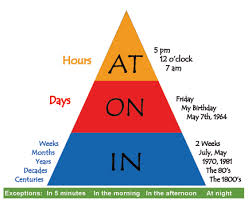
God is the same yesterday, today, and forever (Heb. 13:8).  God sees today what will happen tomorrow. He knows now what will happen in a thousand years. He sees the past, the present, and the future now. That’s so because he is timelessness. He is outside of time. There is no such thing as years, months, weeks, days, hours, minutes, and seconds. They are our way of making sense of the whole shtick. These timelines are just not part of God’s vocabularies.

That’s for our advantage

The idea that God is not in time is actually beneficial to us. Because he is not in time, he can take care of the surgery, the train, and the boat all at once. Because he is timelessness, he could come in time to teach us how to deal with our troubles in this valley of tears while continually sustaining ALL into existence. So the fact that he can be both in and outside of time is to our expediency. He is like us looking at Google Earth. He sees the whole at once; he can even see the dresser in our bedroom, he can be in somewhere in Africa and able to see the clothes in our wardrobe, however he does not act on it. While he knows what he will do from time to time, he lets us make our choice freely. And He knows us through and through. C. S. Lewis puts it this way: “God does not hurry along this time stream of the universe; he has infinite attention to spare for each one of us. Each of us is much alone with him as if we were the only being he has ever created. When Christ died, he dies for you individually as if you had been the only person in the whole world”. That is possible because he is not in time.

Time, Prophecy, Time measurement

Now what do we mean by time? Augustine is our lodestar here. He argues that time is not past because it no longer exists nor the future because it is not yet here. So time is the present and only that exists. If time is past and no longer is, and the future is yet to be, what do we mean when we refer to past and future? According to Augustine, the memory is the mean by which we refer to them. So history does not exist per se because it has already passed; it only exists through the memory. It is by recollecting that we can refer to something non-existent. When we speak about things to come, that has no existence in itself. It only exists in the mind. “Unless something is being realized, it is not” (xi, xviii (24)). Augustine notices that although future does not exist, prophets are able to predict the future very accurately. He admits that’s a puzzle he cannot decipher. Furthermore, he notes that perhaps there are three types of times: a present of things past, a present of time present, and a present of things to come. The first exists insofar there is memory. The second insofar there’s immediate awareness, and the last is insofar there is expectation and that too only exists in the mind (xi, xx (26)). Lastly, time cannot be measured because it is always passing. That passing makes it impossible to measure. Present is only this very moment, this very nanosecond. Time is not movement of the heavenly bodies— meaning, time is not measured by the sun, moon, or the days (xi, xxiii (30)). Neither is time the movement of a physical entity because these physical entities are in time. So time cannot be these (xi, xxiv (31)). The best definition of time for Augustine is “distension of the mind” (xi, xxvi (33)). It is always stretching forward unceasingly. So if we measure any time, it is only the past as we picture it in our mind. If we measure future, we measure what we expect it to be (xi, xxvii (34)).

This issue of time can lead to a lot of moral questions, but let’s choose something that concerns us more directly. Since happiness is the leading causes of why we do anything, let’s talk about how we should live and order our lives with respect to time so as to avoid the aforementioned fleeting questions.

The Gift of the Present Moment

The key that opens the door to interior peace and happiness is the ability to live in the present moment. Truth be told: we have absolutely no hold of the past and the future. It takes almost nothing to alter our promises, foresight, and plans about the future. We only possess the present moment. The present moment is full of opportunity and rich in grace, but it is up to us to take advantage of it. There is something liberating and exciting knowing that the present moment is ours. This person you are talking to right now is your opportunity to make the present counts. This job you are doing right now, be it cleaning bathroom or being a medical doctor, is your present moment; make it unforgettable. Live it as if it were your last chance; live it as if it were your only chance. As it is said, “sufficient for a day is its own trouble; let tomorrow take care of itself (Mat 6: 31)”. 

ImageImageDon’t let the mistakes of the past creep you down. Sincerely ask God to forgive you and live as if you had never done anything wrong. Life is to short too postpone living it to later. The past is the past; there’s almost nothing you can do to change it. The future is too unreliable to plan on it. So the present moment is our best alternative. That alternative elevates us to godliness. It makes us live like God. It is because God is living in the “now” that he can take care of everything all at once. It is when we living in the now that we can reach the being that we were meant to be i.e. happy, focused on what is, peaceful, and free. The present moment gives us serenity in the midst of the storm. It gives hope despite suffering; it allows us to be reminded of the past and prepare the future, but simultaneously being able to remove ourselves from them for we understand that they are simply means that accompany us to our ultimate end. So time prepares us for timelessness– heaven.    


The Heroes of Our Time

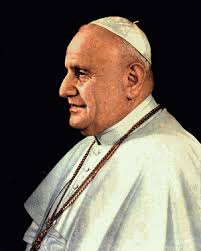
No matter what your belief is, whether or not you support religion, once you get to know their achievements, you will admit that that John XXIII and JPII deserve to be recognized as saints today. Who would not acknowledge that the world and the church are better off today because JPII and john XXIII were part of it? They opened up a real avenue of communication for the world and the gospel to converse. They believed that the Gospel lives in conversation with culture. They knew that if the Church holds back from the culture, the Gospel itself would be silent. Man would not be saved consequently. As a result, John calls the second Vatican council to tell the world that the church is theirs and they are the church. John opened the door of the church to the media and nations so they can understand that God and religion are not just “the sigh of an oppressed creature, the heart of a heartless world, the soul of soulless conditions, or the opium of the people”. The church accompanies people even in the most unspeakable situation, and explains to man their nature and destiny— they are pilgrims on their way to the Father. He quickly was effaced from the scene to make place for JPII to interpret Vatican II.

xxiii-1JPII is well known by my generation because he came to us. He is the man that young people like me fell in love with because he spoke to our hearts. He challenged us to aim for truth, greatness, and happiness. We found ourselves in his words because he challenged us to touch the palpable love of Christ, to acknowledge His voice resounding in the temple of our hearts, to return His bright and penetrating glance, to not be satisfied with mediocrity, to make a masterpiece of ourselves, to have no fear of jumping into the unknown and discover, to know the truth about ourselves, our end, our destiny, and to show faithful souls the unspeakable riches of the love of Christ. He inspired us to not be afraid of the radicalness of Christ’s demands because He loved us first.

JPIIThis was the man who appealed to men and women to embrace their dignity, greatness, and destiny. Through him, we know that a person’s rightful due is to be treated as an object of love, never as an object for use. He helped men and women of my time to understand that true relationship is built on sacrifices and self-denial. He beautifully argued time and again that we flourish best when we rely on others, especially on God. We discover by his words that the human person is most flourishing when he or she is in a relationship with others. He boldly said that it is in a woman that a man finds his identify. It is in his mate that he discovers that he is meant to live in a relationship. Man realizes that his relationship flourishes when he is living in a communion of persons. It is when he gives himself as a total, selfless, free, and reciprocal gift that transcends his very being that he finds happiness. He then inspired to rise ourselves to that beauty. No one before JPII was more outspoken about who man and woman are and how they need to treat each other.
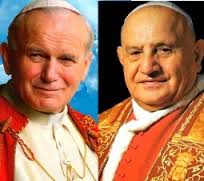
This is a man who did not hesitate one bit to say to scientists, when they thought that faith and science could not cohabite, that they are like two wings on which the human spirit rises to the contemplation of truth because they are concerned about the same fundamental questions that dominate man’s mind in their journey of discovery: Who am I? Where have I come from and where am I going? Why is there evil? What is there after this life? Simultaneously, he was not afraid to tell them that the truth made known to us by Revelation is neither the product of scientific research nor the consummation of an argument devised by human reason. It is a gratuitous gift revealed by Christ. So science can never fathom the depth of that mystery.Unknown-1

Any person who encourages man to reach for the star in such an outstanding way and strives to do the same deserves to be called a saint. That’s what the church understands in declaring them a saint today. You may argue their motives. You may disagree with their method of achievement. You may dislike them as persons. You cannot argue the truth they proclaim: through Jesus Christ, man is the crown of creation whose goal is to become like his God. You may not be capable of living that truth, but I know you wish you could and many of you are striving for that. May Saints John XXIII and John Paul II pray for us to strive and reach the height of heaven.

SPIRITUAL BUT NOT RELIGIOUS?

33% of the world population claim to be spiritual, but not religious. That implies for them that they are not attached to a particular religious group. They describe themselves as “unchurched”, spiritually eclectic, religiously unaffiliated, freethinkers, or spiritual seekers. They give many reasons for refusing to subscribe to religion. The most common reason is religious leaders are not living what they preach. They preach the word of God not as God’s calling, but as a career. They don’t want to be confined to a system or structure, as if they are already part of a system. They claim scientism, as if science can explain everything like ‘why there is anything at all’. They argue that while religious’ substance may be good, they don’t like the style as if each believer is not responsible for his personal faith, in some way. I will not answer all these concerns for the sake of brevity. I will analyze whether or not it makes sense to be spiritual without being religious. Can someone have a deep, abiding friendship with God without religion?

RIDICULOUS

I believe in human’s willingness to achieve phenomenon. I know that fundamentally human beings are created good. I know that each one of us has a deep desire to achieve the good. The reality is to know and desire the good does not mean having the capacity to achieve it. Morally speaking, we may learn the Nicomachean Ethics and the golden rule and be very convinced about it, but when it comes to applying it, we break all the rules. We know what to do, but when the occasion surfaces to act, we just fainaigue it as if we never knew better. The truth of the human nature is that we possess both a soul and a body. We are both human and animal. We vacillate between doing the good and the bad. We love the good due to the presence of the soul, but we do the bad because of the animal. As a result, we need to order our lives so the animal or the body does not rule the soul. You only need to read Plato’s republic to understand how we are built and what to do to properly order our lives.

HELP

We need light to enlighten our darkness. We need encouragement to stay on course. When crises strike, we just are not in our best, perhaps due to emotions, biases, fear etc. We need to constantly be reminded of why we need to stay on course. It is natural that the more we hear something, the more likely we are to act on it when need there is. It works the other way too. The less we hear something, the less likely we are to utilize it when we should. We need the “good news” to strengthen our good behavior and avoid stupidity. You only have to read Dostoyevsky’s Brother Karamazov to see how immoral someone can be when he starts fabricating his own moral codes without religious guidance.

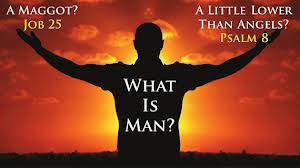
That is where religion comes in. it is always there to remind us what it means to be human. It is constantly there to help us answer in the right way the deepest and most important questions of our lives that stir our hearts. What is man? What is the meaning, the aim of life? What is the right course of action? Why do we do bad things even if we want to do the good? What ought we to do? What’s our purpose? Where does suffering come from and what purpose does it serve? Which is the road to true happiness? What is death? What happens after death? What, finally, is that ultimate inexpressible mystery which encompasses our existence: whence do we come, and where are we going?

photo 1

No one can answer these questions in a way that speaks to the depth, height, and breath of the human soul without turning to religion. No man can remove himself i.e. his emotions, fears, and biases from these questions unless he lets the God who reveals himself through religion speaks, the God who uses man to speak and yet transcends all men in time and places when speaking. These questions stand above any transgression man commits in the name of religion. They go beyond science, particular system, or style. They come from God and lead to God if properly answered.

Finally, no man is an island. Just as no one can finish high school without being committed to some kind of program or school, just as no one can become an engineer without going to an engineering school, no on can reach God without using the ladder of religion to climb to God. It is okay not to be the biggest aficionado of a ladder, but if God used it to condescend and speak to us, why should we despise it? Religion is the mean through which spirituality is built. It gives essence and sense to spirituality. It makes known the true God. Ask any respected anthropologist; he should know that. Religion informs spirituality. There’s no spirituality without religion. Spiritual always has to do with religion. When that is not the case, two things happen. Either a person creates his own religion so he can erect the God that pleases him, or he’s really not a believer at all. This theme, spiritual but not religious, is therefore an illusion.

That being said, the real reason why anyone would reject religion while claiming to be spiritual is really to be able to do whatever he wants without being judged by the standard set by the God of religion. These people want to do what any non-believers are doing, but they simultaneously feel guilty of renouncing God altogether. Their sensus divinitas and conscience bark at them. So they prefer to say that they are spiritual. None of them can answer what it means to be spiritual.

WAKE UP FROM YOUR SLUMBER!!!

Kierkegaard argues that Christianity as we know it today barely relates itself to the message that Jesus preached in the New Testament. Christians are not striving to come closer to the Christianity of the New Testament, he further maintains. I am no Christian apologetic, but I find it necessarily to analyze the veracity of Kierkegaard’s claim.

ImageImage

He maintains that Luther had written 95 theses to show Christianity’s wretchedness, but today only one is necessary— honestly. When we juxtapose the way we are living the Christian life with the one preached in the New Testament, they almost have nothing in common. Official Christianity does not even dare to make clear the requirement of Jesus’ teachings in the new testament because that would bring to light how far removed the two are. We, Christians, live and love in the ordinary human way and so fail to live the extraordinary life that Christianity requires of us.

To illustrate his point, he gives an example. A Christian teacher is paid several thousand dollars as his wages. If we suppress the Christian criterion and assume the ordinary ‘human criterion’, which encourages that a person should have his wages for his work in order to live a respectable life with his family and maintain a perfect life’s standard, then that’s great. However, as soon as the idea of Christian poverty is asserted, several thousand is too high a salary. Christianity requires that when our most basic needs are met, the rest be given to the poor. One can live best the Christian requirement only in poverty (of spirit). It is dishonesty to call ourselves Christian when we so miserably fail to live the Christian requirement. We are dishonest about doing what Jesus requires. We give them our own interpretation according to our own expediency; nevertheless, the way we live is so far removed from the Sermon on the Mount’s requirements. “I will not participate… in what is called Christianity”, Kierkegaard says.

Now how right is Kierkegaard? I believe that the Christian life cannot be reduced to a few critiques. They are people who genuinely try to abide by the teaching of Jesus. Christianity However, it would make Christianity and Christians much more respectable in the world if we actually take very seriously Kierkegaard’s critic. Have you seen how lovable and respectable those who take the Christian faith very seriously are? Not only people respect their sacrifice, they are also attracted to their joy and peace. Religious freedom is being challenged everywhere in the world; perhaps if we take Christianity as Kierkegaard advocated it, no one would dare challenge it since our service would be in so much demands. I must admit as a group, we don’t stand out. We are just like everyone else. There is no way to differentiate Christians and the crowd. We go to their theaters, we watch whatever they want us to watch, we learn what they teach us, and we follow their rules even if they violate our conscience. How do you think the early Christians were able to conquer the world and spread the Word so quickly? It was because they accepted to set a standard tailored after the heart of Jesus— a standard that the ordinary world despised. Of course, that caused them to be imprisoned, mistreated, guillotined and killed, but it also put the world on the path to salvation. Due to our radical examples, the world fell to its knees and asked us for help. Our standards gave meaning to life, put life in right order, and helped put life in perspective.

Today, that standard is lost because we’ve gotten too comfortable over the years. the world has re-conquered the low standard in which it was living before Christianity blossomed. They are winning big time and the powerful force that is Christianity is sleeping. Until we wake up, Kierkegaard’s voice will keep on echoing on our cathedrals, churches, chapels, seminaries, schools, and workplaces. Until then, his voice will continue to resound in our deepest conscience that this Christianity is too far removed from the one preached in the Bible.

YOU ARE IMPORTANT!!!!!!

The truth about the human person is that he wants to feel appreciated. Though we don’t want to admit it, though we want to remain humble, we secretly like when people speak well about us. That’s why we feel bad when they speak ill, and try with every fiber of our being to be the best version of ourselves in order to be on people ‘s good side, most of time. Aristotle even went so far as to say, “no one does the wrong willingly and knowingly”. It’s human nature to want to make a difference. Well, I’ve recently learned we can kill two birds in one shot: we can simultaneously be liked and make a difference.

First, start with a smile. A smile says I like you, you make me happy, and and I am glad to see you. So, as you’re passing by someone today, don’t just simply greet him/her. Do it with a smile. I am not talking about an insincere grin, or a show of your beautiful well-arranged teeth, I mean a heartwarming smile that comes from within, the kind that will make a good price in the marketplace. As you wake up today, greet your husband or wife with a ‘good morning my dear ’ and smile as you say it, and you tell me the difference it makes. As you’re meeting your co-worker, pastor, friends, strangers in the next few days, do it with a nice smile that tell them what you’re about, and you’ll see how much people start to change their attitude toward you. They will want to know about that medication you’re taking, so to speak. Only one requirement, be sincere!

Image

Secondly, be interested in people. “Don’t be selfish. Don’t think everything has to be about you”, says Dale Carnegie. Let others speak. Don’t cut them off. Actively participate in the conversation. Look the person in the eyes. Make him/her feel that he/she is the most important thing in your life at this specific moment. We all like that. Take time to listen to people and listen interestedly. Ask questions. A study by the FBI found that people act on emotion rather than reason and that leads to violence and bad decision making. I think one of the ways to remedy that malady is to give people a chance to speak. The more you let a person speak, especially if there is anger, the quicker the emotion will subside and the mind will calm and there is a greater chance for a happy ending. So kindness, understanding, and good attention in conversation lead to more enjoyable and fruitful outcomes. Everyone wins.

Finally, make people feel important. You and I have a tendency to think that we are the most important person in the whole world, however that does not work. We are most important when we make people feel they are the most important. That’s a universal truth. Philology, all the philosophies, and religious systems—be it Plato, Aristotle, Buddha, Confucianism, Taoism, Jesus— have taught it in one form or another: ”do unto others as you would have others do unto you”. So next time, you see someone down, try to compliment him/her. That will raise up her/his spirit, and you never know, that might start a conversation that saves the day. We all have something worth being praised for. I know what you’re thinking: “what if I don’t find anything worthy of praise?” well, a nice office, a nice smile, a courageous act, an act of kindness, success, a good home or car, how one overcame a struggle etc. etc. are all worth a praise. Do you want people at your office to be more productive? Start praising them on what they are doing well. Tell them how important they are to the place. And you’ll see the difference. For a reason that I ignore, we all like being praised. We like knowing that WE ARE IMPORTANT. It brightens our day; it gives us confidence to go forward. It incentivizes us when we know someone had paid attention. That’s human nature. Again, one requirement, be genuine. No one wants to listen to cheap, insincere praise, or flattery. 

A Daring Thought Indeed!!!

Where do we stand in relation to God? Or better yet, where does God stand in relation to us? When we take a peek at “God’s biography”, one thing cannot fail us. His story is told through us. We are His business. It is almost like He is not who He is without us. It is almost like we are the mirror through which He knows what He looks like. We are the material through which He realizes what He is capable of.

In the beginning, as the book of Genesis has it, God created everything; then He created man in His image and likeness and gives him dominion over all (Gen. 1:27-28). So man is the highest and the crown of creation. That phenomenon, human beings, is the antagonist that shapes all God’s subsequent actions. There is no denying however that we are contingent beings. We cannot do anything on our own. We need God through and through. But God needs us as well. Yes, I say it! He needs us. He needs us to tell His story. I am saying this from observation. We are the object of His actions. He does nothing if it is not directed toward us. Of course, God could engage in action that would serve his own self-preservation apart from any interaction with us, but He does not. It is like He does not have a social life apart from us. It is like He created us because He needed a companion. He does not abandon us one bit. He loves talking to us. Everything He says and does is directed toward.

Image

He is like a movie director who does not have anyone else to work with. So no matter how bad the actors fail, he sticks with them. God is the same way. No matter how much we fail, he keeps on working with us. He creates us in his image and likeness. Though we can keep on failing to be like him, he keeps on trying to make us like him. He never gets the scene the way he wants it, but He is not stopping until we get it the way He wants it.

He is a man without history. He does not have parents, brothers and sisters, children, cousin etc. He comes to have a history. His history is discovered through us. We come to know who He is through what He performs through us. Again, we are His priority.

Image


In conclusion, I can go in many directions, but the obvious one is one of LOVE. Anyone who does not give up on you despite thick and thin is your friend. Anyone who stands by you in rainy, cold, stormy day, earthquakes, sickness, or death loves you. That’s our God. He is madly in love with us. Get to know Him. Let Him find you. Trust him. Give your best. Become His friend and you will be the best version of yourself.

State of The Union

ImageAny proposal must today answer a very basic question— ‘What is in it for me?’ Those who know about it prey and thrive on it. It constitutes the backbone of all TV and Radio commercials. They all aim at satisfying “our” desires. Persuasively answering this question decides the success or failure of all new products. This way of thinking pervades all fields of studies.

This what’s-in-it-for-me attitude is the driving force behind almost all our actions. That attitude makes us act on desires most of the time rather than reason. We become, as a result, the object, of what Nietzsche called, the “Overman”. We turn ourselves into herd exposed to the mercy of the Overman, the powerful. That’s the case because we are cooperating with our exploiters.

This way of thinking is at its height right now. It is started with the scientific revolution. They squarely jettisoned two of the four causes — formal and efficient discovered by Aristotle— to focus solely and completely on the material and final cause. So basically, they reject the nature of things because, as they said, that does not put food on the table. Again, it is the what’s-in-it-for-me attitude that’s behind that rejection. What is the consequences of all this?

No longer do they look for purpose in things; they themselves concoct purpose. To find the purpose of a thing, we use to either ask the person who makes it or observe what a thing naturally does. To fulfill their agenda, they first and foremost reject the idea of a Creator-God as the one who gives meaning and purpose to everything. This easy way out gives us to Marxism, communism and their little brothers. When they became too much to handle, we fall to pure materialism, atheism, …and post-modernism, which cannot even be defined. Progress becomes the real truth. Human beings are not seen as a material and immaterial element striving to be the best version of himself/herself; matter becomes the material out of which he is made. So, instead of looking up (immateriality), we look down (materiality).

 Due to this attitude, we don’t even realize that our colleges are no longer places that empower men and women to seek truth, happiness and the wisdom of life. They simply become a “training wall street”—place that teaches how to make money. That’s an assessment of the situation after all.

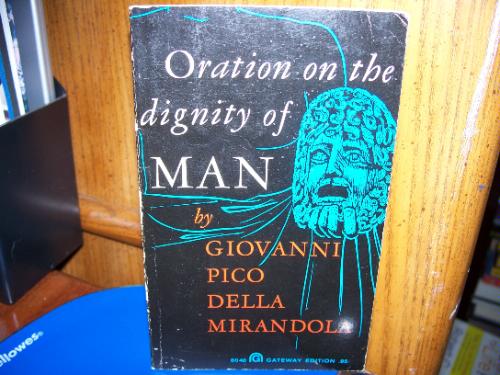
The victim in all this is the human person. There is no such thing about human dignity per se. The dignity of a person lies in what he can do or the amount of money and power he possesses. Human being comes to define no longer as a way of being, but as what’s culturally accepted.

This behavior has unforeseen consequence that cannot be mentioned here. For my part, I believe there will be a day when we will rise from the dunghill in which we are. We will pick ourselves up, dust ourselves off, and ennoble the being that we are. We seem to be sleeping. We all know money, success, pleasure, and appreciation that we so crave for cannot satiate the being that we are. We need to stand for truth, for one another, for kindness, peace, justice, and charity. We stand at a very dangerous intersection. We have a choice to make. Being created as the “crown of creation”, we were made for greatness, but currently our choices only our mediocrity.

ImageGood and intelligent folks, the reality is that we are a being between animals and angels. We can both great and vile. As a result, we will always struggle to choose greatness and vileness, truth and falsity, and light and darkness. This is our facticity, but giving up cannot be an option. We are not alone here. As important as we are, we cannot settle for low. We must pick out our mat and start walking toward our true destination. We must change direction. We must wake up from this slumber. Each one of us must take our destiny in our own hand while seeking to know why we are here, where we are to go, and so what is the proper way to act. Only one path leads to joy. Don’t choose randomly. Ask if you have to. 

Not All Question Are Equal!!

Augustine remains a philosopher at heart though deeply Christian. Despite the many errors he was in while pursuing philosophy before turning to God, he did not jettison it when he comes to believe . He used his philosophical insight to understand and explain the faith to which he had assented. He calls on God to assist him in his effort. He prays that God speaks to him as he is drinking at the fountain of his word (Augustine’s Confessions book xi, ii (3)). Two questions he would like to understand. What does it mean that God spoke when he was making heaven and earth? And what was God doing before creation? If he was not doing anything, why did he not remain like that forever? If he became occupied, it seems that God is not eternal. ‘Fides querns intellectum’ is what is at work here.

ImageIn answering the first question, notice that Augustine has no doubt that God creates heaven and earth; he only wants to know how he made them. He cannot speak to Moses because he is no more. Heaven and earth cry out they are made insofar they suffer change and variation. So he cannot ask them. It is not worth asking ourselves because the manner of our existence testifies that we are made. Although we are good and beautiful and have existence, we are filled with deficiency in comparison with our Maker (xi, iv (6)). How did God make them then?  Not the way a craftsman fashions an object for a craftsman “imposes form on what already exists and possesses being”. Moreover, God did not make the universe within the framework of the universe for there would be no place for that to happen. Neither did he have a tool in his hand for nothing was made yet. From this method of elimination, Augustine concludes that heaven and earth were made by the Word of God. “He ‘spoke’ and they were made” (xi, v (7)). That spoken Word is nothing like a voice, which has a beginning and an end, transient and temporal, and always in time. The Word that God spoke is very different and abides forever (xi, vi (8)). No element of it yields to place or succeeds to something. It is coeternal with God. It is uttered eternally. It has no beginning and end for it is the Beginning and End and is spoken in ‘simultaneity of eternity’ (vii (9); viii (10)). That Word that God spoke to create heaven and earth has always existed.  It has never been in time. It shines right through us and strikes our heart without hurting it. Before it, we are filled with terror and burning love. We are filled with terror insofar it is utterly other than us, and with burning love insofar we are akin to it (ix, 11). That’s the Word that creates heaven and earth. Understanding this gives a broader understanding of God’s nature and so allows him to answer more impertinent questions.

Image

No question is more impertinent that the second question. Asking it is to attempt to taste eternity when the heart is still flitting about in the realm of transient things. To discover this answer the heart needs stability (xi, xi (13)). The funny answer is that “he was preparing hell for those who inquire into profundities” for he was not making anything for making something implies being in time. God is outside of and creates time. It certainly did not elapse before God made it. So, such question is foolish (xi, xiii (14)). God is the same yesterday, today and forever. As Augustine puts it, “God’s years subsist in simultaneity”. His “years are one day, and his ‘day’ is not any and every day but Today, because his Today does not yield to a tomorrow, nor did it follow on a yesterday. His Today is Eternity” (xi, xiii (16)). He quickly confesses that though he explains that God is not in time. He does not know what time is. As he famously says, “provided that no one asks me, I know: if I have to explain it to an inquirer, I know not” (xi, xvi (17)). Well, he did, wait for the next post for his answer.